
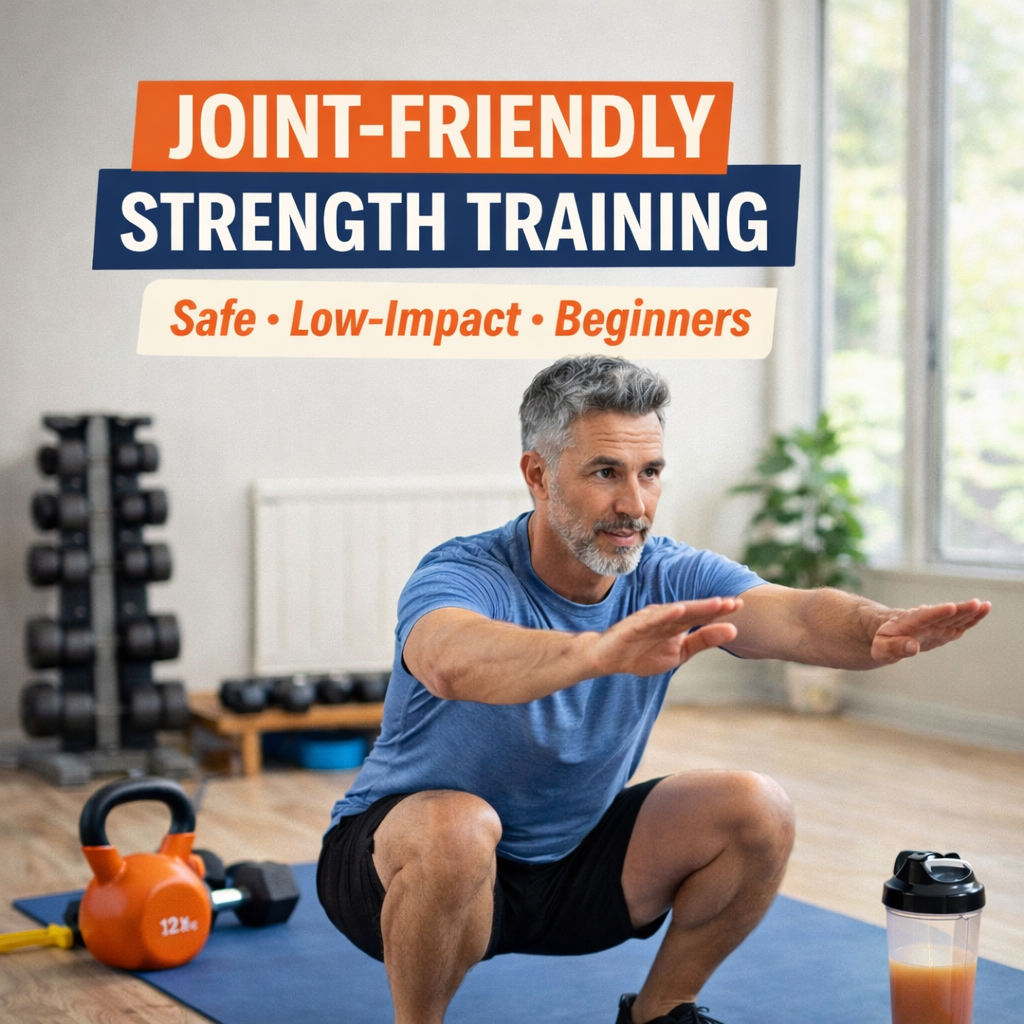
Joint-friendly strength training is one of the best ways to build strength while protecting your joints and reducing the risk of injury. For beginners and adults over 40, traditional high-impact workouts can sometimes lead to discomfort or strain.
The good news is that you can still build muscle, improve mobility, and stay active by using safer, controlled exercises.
In this guide, you’ll learn:
- What joint-friendly strength training is
- The best low-impact exercises
- How to train safely
- A simple beginner workout plan
If you’re building a long-term fitness routine, you may also want to read How to Build Muscle After 40 for a complete strategy.
Table of Contents
🧠 What is Joint-Friendly Strength Training?
Joint-friendly strength training is a style of exercise that focuses on controlled, low-impact movements designed to build strength while minimizing stress on joints such as the knees, hips, shoulders, and lower back.
Common exercises include:
• Bodyweight squats
• Resistance band exercises
• Light dumbbell movements
• Controlled lunges
• Mobility drills
This approach helps improve strength, stability, and long-term joint health.
Why Joint-Friendly Training Matters
As you age or return to exercise after a break, joint health becomes more important.
According to Mayo Clinic, low-impact strength training can help reduce joint stress while improving muscle strength and overall function.
Benefits include:
- Reduced injury risk
- Improved mobility
- Better long-term consistency
- Safer progression
Best Joint-Friendly Strength Training Exercises
1. Bodyweight Squats
Why it works:
- Builds lower body strength
- Improves mobility
- Low impact on joints
2. Resistance Band Rows
Why it works:
- Strengthens the upper back
- Improves posture
- Reduces strain on joints
3. Step-Back Lunges
Why it works:
- Less stress on the knees
- Improves balance
- Builds leg strength
4. Incline Push-Ups
Why it works:
- Reduces pressure on the shoulders
- Easier than floor push-ups
- Great for beginners
5. Glute Bridges
Why it works:
- Strengthens hips and glutes
- Supports the lower back
- Low joint impact
6. Planks
Why it works:
- Strengthens core
- Improves stability
- No joint strain
Beginner Workout Plan
This joint-friendly strength training routine can be done 3 times per week.
Perform 2–3 rounds:
- squats – 12 reps
- incline push-ups – 10 reps
- band rows – 12 reps
- lunges – 10 per leg
- plank – 30 seconds
Rest 45–60 seconds between rounds.
If you’re short on time, combine this with a 15 Minute Emergency Workout.
Tips for Safe Strength Training
Focus on Form
Proper technique reduces stress on joints.
Start Light
Use lighter resistance and build gradually.
Control Your Movements
Avoid fast or jerky motions.
Warm Up Properly
A short warm-up improves mobility and reduces injury risk.
Common Mistakes to Avoid
- Lifting too heavy, too soon
- Skipping warm-ups
- Poor form
- Ignoring recovery
Avoiding these mistakes improves long-term results.
🔥 People Also Ask
What is joint-friendly strength training?
Joint-friendly strength training is a type of workout that uses low-impact, controlled exercises to build strength while reducing stress on joints.
What is joint-friendly strength training?
Joint-friendly strength training is a type of workout that uses low-impact, controlled exercises to build strength while reducing stress on joints.
What exercises are easiest on the joints?
Exercises such as bodyweight squats, resistance-band workouts, glute bridges, and incline push-ups are easier on the joints than high-impact movements.
What exercises are easiest on the joints?
Exercises such as bodyweight squats, resistance-band workouts, glute bridges, and incline push-ups are easier on the joints than high-impact movements.
Can you build muscle with low-impact workouts?
Yes. Low-impact workouts can still build muscle when performed consistently with proper resistance and progression.
Can you build muscle with low-impact workouts?
Yes. Low-impact workouts can still build muscle when performed consistently with proper resistance and progression.
How often should beginners do strength training?
Beginners should aim for 2–3 sessions per week, allowing time for recovery between workouts.
How often should beginners do strength training?
Beginners should aim for 2–3 sessions per week, allowing time for recovery between workouts.
Is strength training safe for people over 40?
Yes. Strength training is highly beneficial for people over 40 when done with proper form and controlled movements.
Is strength training safe for people over 40?
Yes. Strength training is highly beneficial for people over 40 when done with proper form and controlled movements.
Final Thoughts
Joint-friendly strength training is one of the safest and most effective ways to build strength, improve mobility, and stay active long-term. By focusing on controlled, low-impact exercises, you can reduce injury risk and maintain consistent progress.
For more helpful guides, explore:
- How to Build Muscle After 40
- Best Exercises for Men Over 40
- Stay Fit With a Busy Schedule
- Home Workouts for Busy Professionals