The Best Dumbbell Pull Exercises For Men Over 40: Better Posture And Beginner Strength Standards. If you are over 40 and feel tight, rounded in the shoulders, or stiff from sitting all day, you are not alone.
I felt the same way, with a neck that constantly ached and a back that never quite relaxed. The missing piece was simple: my muscles were weak from all the pushing and sitting I did.
Dumbbell pull exercises train upper body muscles like the upper back, lats, biceps, and rear shoulders through the pulling movement. These build upper back strength to pull your shoulders back, open your chest, and support your neck and lower back.
They also lay the groundwork for solid strength numbers, including the long-term target of Beginner Strength Standards For Men Over 40 (What Numbers To Aim For Safely).
I like adjustable dumbbells because they are joint-friendly and easy to use at home. Adjustable dumbbells, like the options in my guide to the best adjustable dumbbells for small spaces, make it simple to progress without filling a room with metal.
In this post, I walk through the best dumbbell pull exercises, how to do them safely, and how to plug them into your week for better posture, less pain, and more confidence.
Key Takeaways
- Strong pulling muscles help men over 40 stand taller and reduce pain.
- Dumbbell pulling exercises are joint-friendly and perfect for home or the gym.
- Consistent practice, not heavy ego lifting, moves you toward safe strength standards.
Why Men Over 40 Need Strong Pulling Muscles For Better Posture
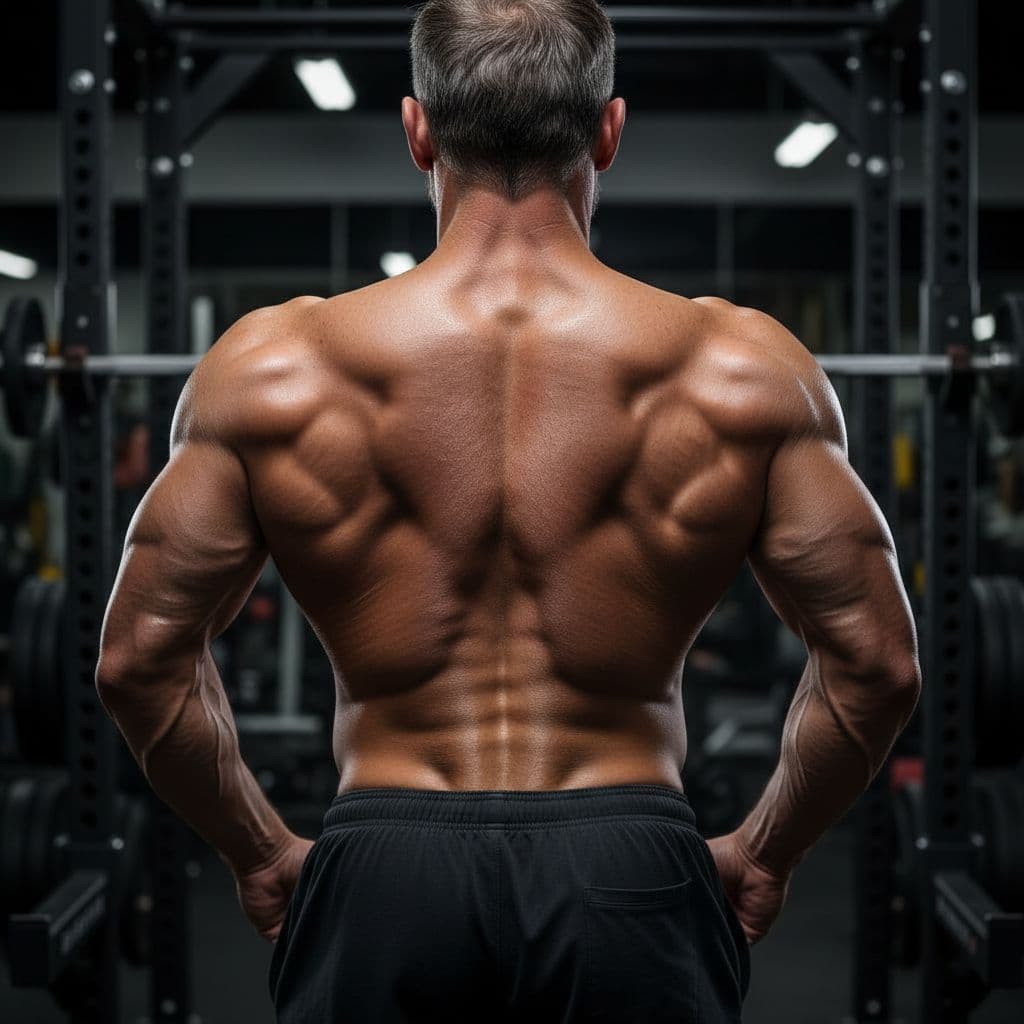
When I say “pulling muscles,” I mean the upper back, lats, biceps, and rear delts. These muscles perform the necessary pulling movement to pull your shoulders back, keep your chest from caving in, and support your neck. When they are weak, the chest and front shoulders pull everything forward.
Most men over 40 sit a lot. Driving, computer work, phone time, and couch time all push the head and shoulders forward. The chest gets tight, the upper back gets tired, and the neck has to hold a heavy head in front of the body.
That mix often leads to neck pain, cranky shoulders, and even low back issues. Strong pulling muscles act like a built-in posture brace. They also support safe progress toward goals like the Beginner Strength Standards For Men Over 40 (What Numbers To Aim For Safely), because good posture keeps the joints better aligned as weights increase.
Dumbbell pulling work is low-equipment, easy to scale, and adaptable to any setup, from a corner of your bedroom to a complete gym. I can go light for rehab or heavy for strength, all with the same tools.
How Poor Posture Shows Up In Daily Life
Poor posture sneaks up on me in everyday moments.
I catch myself slouching at the desk, chin pushed toward the screen. I stand in line with my chest sunken and shoulders rolled in. My upper back feels tight and tired by the end of the day. Holding kids, a backpack, or heavy grocery bags wears me out fast.
Those are signs that the front of my body is tight and the back is weak. Once I saw them, it was easier to treat my workouts as posture training, not just a way to sweat.
Pulling Exercises As A Posture “Reset”
Pulling exercises act like a reset button for my posture. Each rep teaches my body to pull the shoulders back and down, instead of up and forward.
With consistent dumbbell rows, reverse flyes, and pullovers, I noticed my shirts hung better, my chest sat higher, and I experienced less lower back strain when I walked. I did not need huge weights to feel the shift. I required good form, a full range of motion, and regular practice.
Over time, this work also helps with weight and health goals. Strength training and muscle gain support better body composition, as supported by Mayo Clinic guidance on belly fat and physical activity.
Smart Setup: How To Pick The Right Dumbbells And Stay Safe Over 40
Before jumping into rows and flies, I like to set up the basics: wise weight choices, a quick warm-up, and simple safety rules.
Choosing Dumbbells That Protect Your Joints
For men over 40, starting lighter is always better. I pick a weight that feels like a 6 or 7 out of 10 effort by the last few reps, not a 9 out of 10 grinder.
Adjustable sets are great because I can increase the weight slowly without buying more gear. If you train at home, the best adjustable dumbbells for small spaces make it easy to slide from lighter rehab loads to stronger rows over time.
Simple Warm Up For Safer Pulling Workouts
I spend at least 5 minutes warming up my shoulders and spine:
- Arm circles, forward and backward.
- Band pull-aparts or very light dumbbell rows.
- Cat cow on the floor for the spine.
- Shoulder blade squeezes, holding each for a couple of seconds.
Warm joints and active shoulder blades matter more for posture than heavy weight, especially after 40.
How To Avoid Common Over-40 Pulling Injuries
Proper form is essential. A few simple rules keep my back and shoulders happy, supporting the lower back:
- Keep a flat lower back, not rounded, during rows.
- Stop before any sharp or pinching pain.
- Move the weight with muscle, not swinging or jerking.
- Breathe steadily and do not hold your breath.
These pulling exercises also complement the stability needed for compound lifts like deadlifts. I also remind myself that chasing big strength numbers too fast can backfire. Building toward Beginner Strength Standards For Men Over 40 (What Numbers To Aim For Safely) should be a months-long plan, not a weekend stunt.
For long-term health and body composition, steady training matters more than hero sets, which matches what you see in Healthline’s science-backed tips to stay lean and healthy.
The Best Dumbbell Pull Exercises For Better Posture In Men Over 40
These practical functional exercises are the pulling moves I lean on most for posture, joint health, and strength. Note that you can substitute a kettlebell for dumbbells in some row variations.
1. Bent Over Dumbbell Row For Strong Upper Back
I hinge at the hips with a neutral spine, core engaged, chest proud, and knees soft, using my glutes to maintain the hinge. From there, I pull the dumbbells toward my hips, not my ribs, and squeeze my shoulder blades together.
If my hamstrings feel tight, I support one hand on a bench and row with the other. This move is the backbone of my posture work, strengthens the posterior chain, and helps my lower back when I keep my form tight.
2. One Arm Dumbbell Row To Fix Left And Right Imbalances
I set one knee and one hand on a bench or sturdy chair. With the other hand, I row the dumbbell up, keeping my chest open and my shoulder away from my ear.
These dumbbell rows help even out strength from side to side while building unilateral stability. They also break the habit of twisting or leaning, which can pull posture out of line.
3. Chest Supported Dumbbell Row To Protect The Lower Back
I lie face down on an incline bench, chest supported, with dumbbells hanging straight down. From there, I row them toward my ribs and squeeze the shoulder blades, targeting the lats (latissimus dorsi) and focusing on my upper body.
Since my lower back is supported, I can focus entirely on my upper back. This is a favorite when my lower back feels sensitive, but I still want pulling volume.
4. Dumbbell Reverse Fly For Rear Shoulders And Upper Back
With light weights, I hinge slightly at the hips and keep a slight bend in the elbows. I open my arms out to the sides, like forming a wide “T,” and pause at the top.
Dumbbell reverse flies light up the rear delts, rhomboids, and upper back to improve upper back strength, which helps pull my shoulders back into a better position. I keep the weight modest and avoid any swinging.
5. Dumbbell Pullover For Lats And Open Chest
I lie on a bench and hold one dumbbell with both hands over my chest. I slowly lower it back behind my head, keeping my ribs down, then pull it back up with my lats (latissimus dorsi), striving for a full range of motion.
This trains the lats and stretches the chest simultaneously. If my shoulders feel touchy, I shorten the range and use very light weight.
6. Dumbbell Upright Row Variation For Upper Traps And Postural Strength
I grab two dumbbells with a slightly wider grip and stand tall. I pull the weights up toward mid chest, elbows out, then control them down.
I avoid shrugging into my ears, so my neck stays relaxed. Strong traps and mid back help keep my shoulders from slumping forward.
How To Put These Pulling Exercises Into A Simple Weekly Plan
Once the moves feel comfortable, I plug them into short, realistic workouts.
Beginner Sets, Reps, And Rest For Men Over 40
A solid starting point is 2 to 3 sets of 8 to 12 reps for each pulling exercise, with 1 to 2 minutes rest between sets. I train them 2 to 3 days per week.
When 12 reps feel smooth and controlled with proper form, I add a small amount of weight. That slow increase aligns with the safe Beginner Strength Standards For Men Over 40 (What Numbers To Aim For Safely) and keeps my joints happy.
Sample 15 Minute Posture Focused Pulling Workout
Here is a quick routine of dumbbell exercises I use on busy days:
- Bent over row
- One arm row (left and right)
- Reverse fly
- Dumbbell pullover
I do 8 to 12 reps of each, rest briefly, then repeat 2 or 3 rounds. If you want more ideas for short, efficient training, I break that down in my guide to Full-body strength training for busy schedules.
Balancing Pulling With Pushing For Long-Term Posture
For better posture, I aim for at least as much pulling as pushing. Many men over 40 feel even better with a 2-to-1 ratio of pulling to pushing in each workout, while keeping the core engaged throughout.
That balance keeps the shoulders centered, builds stability, reduces cranky joints, and helps me stay able to train hard for decades, not just a few weeks.
Simple FAQs About Dumbbell Pull Exercises For Men Over 40
How often should I do dumbbell pull workouts to improve my posture?
I like to train pull movements 2 to 3 times per week.
That gives my back, shoulders, and elbows enough work to improve posture, without beating up my joints. I leave at least one rest day between hard pull sessions so my muscles and connective tissue can recover.
A simple weekly setup looks like this:
- Pull workout on Monday
- Pull workout on Wednesday or Thursday
- Optional lighter pull work on Saturday
If my joints feel cranky, I drop to 2 days per week and shorten the sets rather than pushing through the pain.
What are the best dumbbell pull exercises for men over 40?
I stick to movements that are joint-friendly, easy to set up, and stable.
My top choices:
- One-arm dumbbell row (on a bench or with one hand on a chair)
- Chest-supported dumbbell row (upper body on an incline bench)
- Dumbbell Romanian deadlift (for hamstrings and upper-back tension)
- Dumbbell face pull or high row (seated, pulling to the face or upper chest)
- Dumbbell reverse fly (on a bench, for rear delts and posture)
These give me a strong base in pulling, better posture, and grip strength without needing a full gym setup.
What beginner strength standards should I aim for with dumbbell rows?
I like simple, realistic goals for men over 40. These are per arm for a controlled one-arm dumbbell row, 8 solid reps, no jerking or twisting:
| Bodyweight | Solid Beginner Goal | Strong Goal |
|---|---|---|
| Under 160 lb (73 kg) | 35 lb (16 kg) | 55 lb (25 kg) |
| 160 to 200 lb | 40 lb (18 kg) | 60 lb (27 kg) |
| Over 200 lb | 45 lb (20 kg) | 70 lb (32 kg) |
I focus on form first. If I cannot keep my hips still and my shoulder packed, I drop the weight and build back up.
How do dumbbell pull exercises help my posture?
Most of my day pulls my shoulders forward, like driving, phones, and laptops.
Pull exercises help by:
- Strengthening the upper back so my shoulders sit back instead of rounding
- Training the rear delts and mid-back so I can hold a tall chest with less effort
- Balancing out all the pressing I might do, like push-ups and bench work
I think of these lifts as “anti-hunch” training. When I get stronger at rows, face pulls, and reverse flies, it feels easier to stand tall without forcing it.
Is it safe for my shoulders and lower back to do these after 40?
Yes, as long as I respect my joints and pick the right variations.
Here is how I keep it safe:
- I start with light weights and see how my shoulders and back feel the next day
- I keep my ribs down and avoid arching my lower back during rows
- I pull with my elbows, not just my hands, so I feel my back work instead of my neck
- I avoid shrugging my shoulders toward my ears
If any movement gives me sharp pain, I swap it for a more supported version, like a chest-supported row instead of a bent-over row.
How many sets and reps should I do as a beginner over 40?
I keep things simple so I can stick with it.
For most dumbbell pull exercises, I like:
- 2 to 3 sets per exercise
- 8 to 12 reps per set
If I am very new or coming back after a long break, I start with:
- 2 sets of 10 reps, light to moderate weight, for 2 or 3 exercises
I leave 1 or 2 reps in the tank, so I finish the set feeling like I could do a little more, not like I just survived a test.
Should I train both vertical and horizontal pulling?
If I only have dumbbells, most of my pulling will be horizontal (row variations).
I still try to hit both patterns:
- Horizontal pulls: rows, chest-supported rows, reverse flies
- “Higher” pulls: face pull style movements, high rows toward the upper chest, or face pull
If I have a pull-up bar or band, I might add a few vertical pulls or band pulldowns, but dumbbell rows carry most of the load for my back and posture.
What if I have tight shoulders or a stiff upper back?
I start my session with a short warm-up that opens things up a bit.
For example:
- A minute or two of gentle arm circles
- A few rounds of cat-cow on the floor
- Light band pull-aparts or very light reverse flys
Then I ease into the first exercise with one or two warm-up sets using a light weight. My goal is to feel smoother by the second work set, not to smash myself from the first rep.
How do I know if my form is good on dumbbell rows?
I use a few simple checks:
- My back stays flat or slightly arched, not rounded
- My shoulder blade on the working side pulls back, then glides forward, instead of my whole torso twisting
- I feel the work in my mid-back and lats, not just my arm or neck
- The weight moves in a smooth path, close to my body
If I catch myself yanking the weight or swinging my body, I lower the dumbbell and rebuild with slower, cleaner reps.
Can I build real strength with just dumbbell pull exercises at home?
Yes, if I stay consistent and increase the challenge over time.
Here is how I progress my home dumbbell work:
- I slowly increase the weight when the top end of my rep range feels easy
- I add a pause at the top of the row to build control
- I slow the lowering part of the rep to make lighter weights feel harder
If I can row heavier dumbbells for the same clean reps I could not handle a few months ago, I know I am building real, functional strength, even training in my living room.
Conclusion
Strong pulling muscles help men over 40 stand taller, hurt less, and feel stronger in daily life. The key is consistent dumbbell exercises with solid form, not chasing max weights on day one. Over time, these exercises support a safe path toward Beginner Strength Standards For Men Over 40 (What Numbers To Aim For Safely) and a body that looks and moves better.
My challenge to you is simple: pick any 3 of the pulling exercises, start light this week, and track how your posture and comfort feel over the next month. Your future shoulders and spine will thank you.