
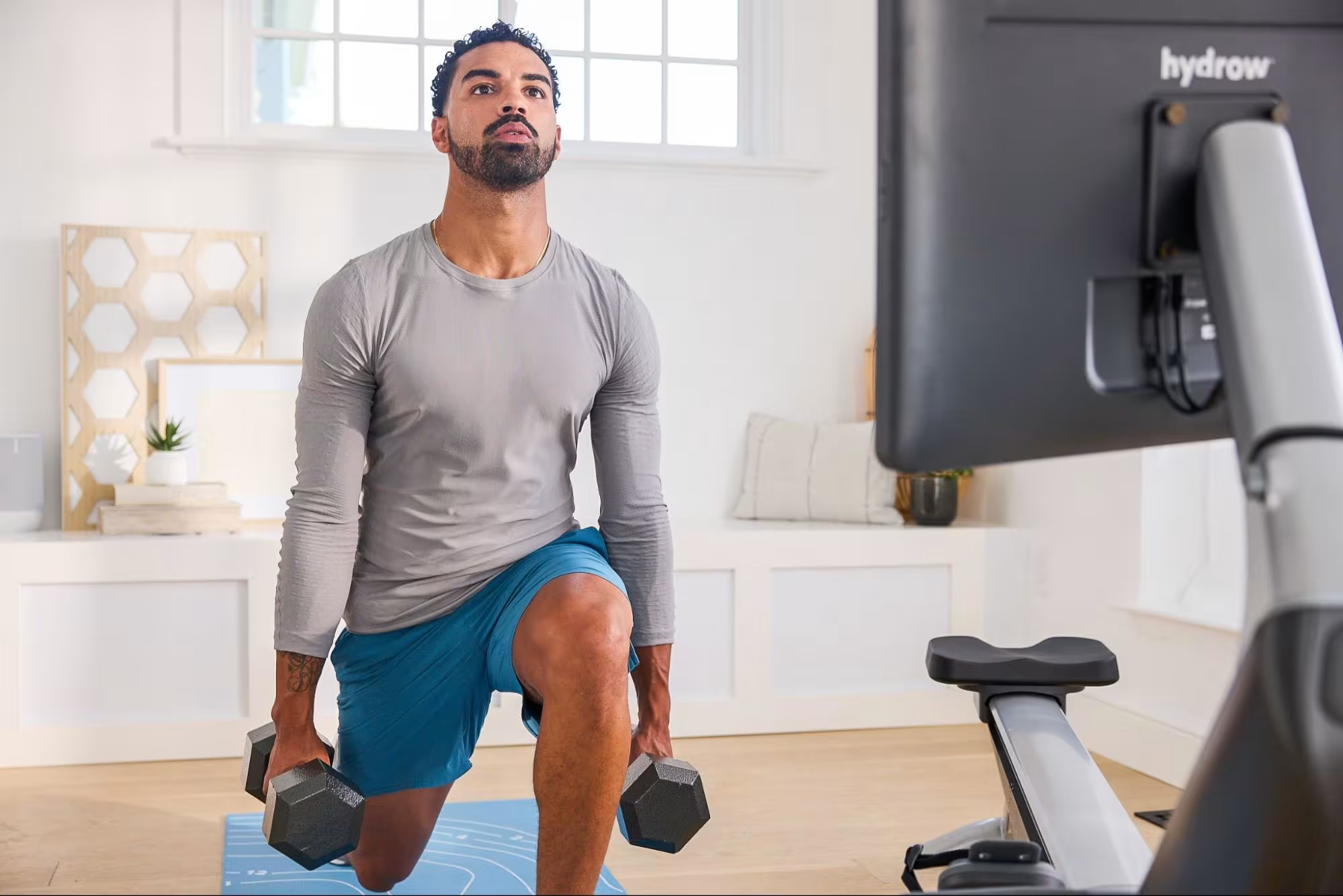
For many professionals, maintaining a consistent workout routine can feel nearly impossible. Long work hours, family responsibilities, and packed schedules often push exercise to the bottom of the priority list.
The good news is that you can stay fit with a busy schedule without spending hours in the gym.
With the right strategies, short workouts, and smart planning, even the busiest professionals can maintain strength, energy, and overall health.
In this guide, you’ll learn:
- Why consistency matters more than workout length
- The best time-efficient workout strategies
- How to stay motivated with limited time
- Simple weekly workout schedules
- How nutrition and recovery support a busy lifestyle
These strategies can help you stay active and healthy even during the busiest seasons of life.
Why It’s Hard to Stay Fit With a Busy Schedule
Many professionals struggle with fitness because traditional workout routines require long gym sessions and rigid schedules.
Common challenges include:
- long work hours
- commuting
- family responsibilities
- frequent travel
- lack of energy after work
Because of these obstacles, many people assume they simply don’t have time to exercise.
However, research shows that short, structured workouts can still deliver excellent results.
According to the American College of Sports Medicine, even moderate exercise performed consistently can significantly improve health and fitness.
The key is building routines that fit your lifestyle.
Focus on Efficient Workouts
One of the most effective ways to stay fit with a busy schedule is by prioritizing efficient workouts.
Instead of long gym sessions, focus on workouts that deliver maximum results in minimal time.
Examples of Efficient Workouts
- full body strength workouts
- circuit training
- high intensity interval training
- resistance band workouts
- bodyweight routines
Many of these workouts can be completed in 20–30 minutes.
If you prefer exercising at home, you may also want to read:
➡ Home Workouts for Busy Professionals
This guide explains how to build effective home workout routines with minimal equipment.
Short Workouts Can Be Extremely Effective
A common misconception is that workouts must last an hour or longer to be effective.
In reality, short, consistent workouts can produce significant improvements in strength and fitness.
A 20–30 minute full-body workout can target multiple muscle groups and improve cardiovascular health.
For example:
Example 30-Minute Workout
Perform 3 rounds.
Goblet Squats
10–12 repetitions
Push-Ups
10–12 repetitions
Bent-Over Rows
10–12 repetitions
Shoulder Press
8–10 repetitions
Plank
30–45 seconds
This routine trains the entire body while remaining time-efficient.
Build a Realistic Weekly Workout Schedule
Consistency matters far more than perfection.
Busy professionals should focus on sustainable workout schedules rather than extreme routines.
Example Weekly Schedule
Day 1 – Full Body Strength
Squats
Push-ups
Rows
Core exercises
Day 2 – Rest or Light Activity
Walking
Stretching
Day 3 – Upper Body
Chest press
Shoulder press
Rows
Arm exercises
Day 4 – Rest
Active recovery or mobility.
Day 5 – Lower Body
Squats
Lunges
Deadlifts
Core work
Even three workouts per week can produce meaningful results.
Prioritize Strength Training
Strength training is especially important for maintaining muscle mass and metabolic health.
This becomes even more important as we age.
For a deeper look at this topic, you may also want to read:
➡ Fitness After 40
Strength training supports:
- muscle maintenance
- bone density
- metabolism
- injury prevention
Even simple exercises with dumbbells or resistance bands can provide significant benefits.
Plan Workouts Like Important Appointments
One of the best strategies to stay fit with a busy schedule is to treat workouts like non-negotiable appointments.
Consider:
- scheduling workouts in your calendar
- exercising before work
- planning workouts for lunch breaks
- setting reminders
Many professionals find that morning workouts are the easiest way to maintain consistency.
Reduce Friction in Your Routine
Making workouts easier to start dramatically improves consistency.
Here are a few simple strategies:
Keep Equipment Accessible
Having dumbbells or resistance bands at home makes it easier to begin workouts quickly.
Prepare Workout Clothes in Advance
Small habits reduce the mental effort required to begin exercising.
Choose Short Workouts
When workouts feel manageable, you are more likely to stay consistent.
Nutrition Supports Energy and Recovery
Exercise is only one component of staying healthy with a busy schedule.
Nutrition also plays a major role.
Balanced meals that include protein, healthy fats, and complex carbohydrates support:
- sustained energy
- recovery after workouts
- improved focus throughout the day
If you want to learn more, read:
➡ Nutrition for Busy Professionals
Avoid Fitness Burnout
Busy professionals sometimes try to follow overly intense workout programs.
This often leads to burnout and inconsistency.
Instead, focus on:
- moderate workout intensity
- realistic schedules
- gradual progress
Sustainable routines produce far better long-term results.
Frequently Asked Questions
Can you stay fit with a busy schedule?
Yes. Consistently performing short workouts can significantly improve strength, fitness, and overall health.
Can you stay fit with a busy schedule?
Yes. Consistently performing short workouts can significantly improve strength, fitness, and overall health.
How long should workouts be for busy professionals?
Most effective workouts last 20–30 minutes, although even shorter sessions can be beneficial.
How long should workouts be for busy professionals?
Most effective workouts last 20–30 minutes, although even shorter sessions can be beneficial.
What type of exercise works best for busy schedules?
Full-body strength workouts, resistance training, and short-circuit workouts are especially effective.
What type of exercise works best for busy schedules?
Full-body strength workouts, resistance training, and short-circuit workouts are especially effective.
Final Thoughts
Staying active does not require long workouts or complicated programs.
By focusing on efficient workouts, realistic schedules, and consistent habits, you can stay fit with a busy schedule and maintain long-term health.
Even short workouts performed regularly can build strength, improve energy levels, and support overall well-being.
If you’re looking for additional strategies, explore these guides:
- Home Workouts for Busy Professionals
- Fitness After 40
- Travel Workouts
- Nutrition for Busy Professionals
These resources will help you build a sustainable fitness routine that fits your lifestyle.