
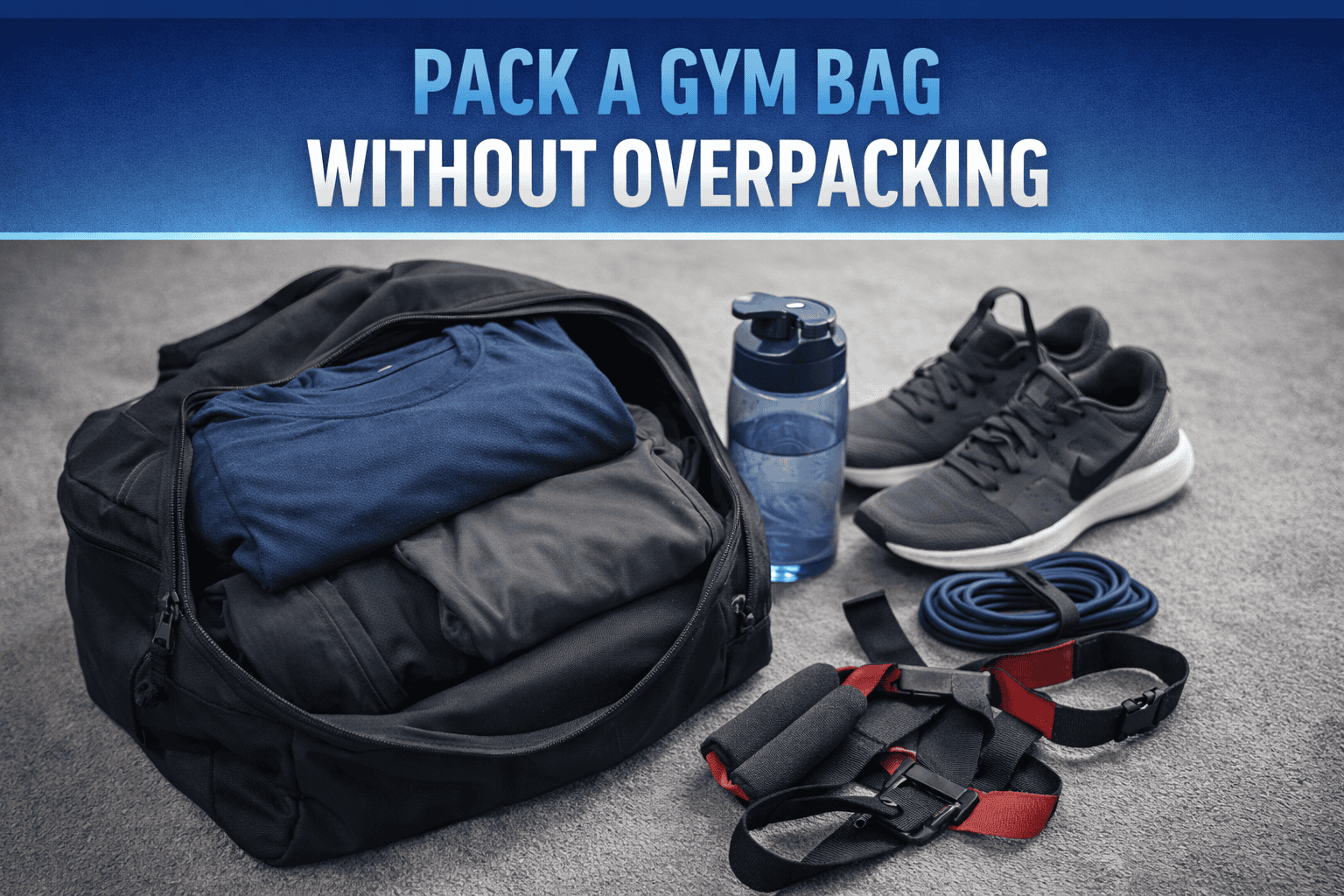
How to Pack a Gym Bag for Travel Without Overpacking
Packing a gym bag for travel isn’t about bringing everything you might need — it’s about bringing only what you’ll actually use. The biggest mistake travelers make is packing for every possible workout scenario, which leads to heavy bags, clutter, and skipped workouts.
The simplest rule to follow is this:
If an item can’t be used for at least two different workouts, it doesn’t go in the bag.
Start by deciding how many workouts you realistically plan to do on the trip. For most business trips or short vacations, that’s usually 2–4 sessions, not daily workouts. Once you know that, you can pack intentionally instead of emotionally.
A smart travel gym bag usually includes:
- 2 workout outfits max, chosen for comfort and versatility
- One lightweight training shoe (or none if hotel workouts are planned)
- Minimal gear that replaces multiple pieces of equipment
- Compact accessories only (no bulky “just in case” items)
Avoid packing duplicate clothing, extra shoes, or equipment you rarely use at home. Those items add weight without adding value.
When you pack with intention, your gym bag stays light, organized, and easy to manage — and you’re far more likely to actually follow through with your workouts while traveling.
Gym Bag Checklist: Key Takeaways
- I decide my workouts first, then I pack to match them.
- I check the hotel gym, local options, and weather before I pick shoes or layers.
- I pack a small set of quick-dry workout clothes that can be mixed and matched.
- I use a clean, dirty, wet system for my athletic bag so the stink doesn’t spread.
- I keep travel-sized hygiene products, leak-proof, and a plan for sweat control.
- I bring a few compact tools that cover a wide range of workouts, not a bag of random extras.
Table of Contents
How to Pack a Gym Bag for Travel Without Overpacking Essentials
If I don’t know what training I’m doing, I’ll pack “just in case” items into my workout bag. That’s how bags get heavy and chaotic. My rule is simple: the plan drives the packing list, not the other way around.
Here’s how I choose what I’ll actually do on the trip:
- Hotel gym session (machines and dumbbells, quick and easy)
- Outdoor run or brisk walk (usually the easiest win)
- Bodyweight session in the room (quiet, joint-friendly, no excuses)
- Local gym day pass (only if it’s a more extended trip or I’m training for a goal)
If you like having a simple setup anywhere, the mindset is similar to building a small home training zone. I use the same “minimal gear, high use” approach from my small-space home gym setup ideas, just scaled down to a bag.
I check the hotel gym and the weather first (then pack around it)
Before I pack, I do two quick checks:
- Hotel gym: I look at photos, scan reviews, and check the hotel site for an equipment list. If it’s unclear, I’ll message the front desk and ask what they actually have (dumbbells, cable station, bench, treadmill).
- Weather and daylight: I check the forecast, sunrise, and sunset. Cold mornings change everything, especially if I plan to walk a lot.
Examples that save space:
- If the gym has dumbbells up to a decent weight and a cable stack, I usually skip weightlifting accessories.
- If the gym has just treadmills and a sad yoga mat, I bring a long loop band and a mini band and plan a room workout.
- If rain is likely, I pack a light layer and choose shoes with better grip. If it’s cold, I pack joggers or tights, so I don’t talk myself out of moving.
I choose workouts that fit my energy, time, and joints while traveling
Travel beats you up in small ways. Sitting, poor sleep, dry air, weird meals. I use a fitness tracker to manage my energy levels on the road, so I keep workouts shorter and less “ego-driven.” I’m not trying to set a personal record after a 6:00 a.m. flight.
For men 30-plus, this matters even more. Knees, back, shoulders, and elbows don’t always love high-impact jumps or marathon sessions when recovery is off.
My simple travel split looks like this:
- Day 1: Full-body strength (30 to 40 minutes)
- Day 2: Cardio zone 2 or long walk (30 to 60 minutes)
- Day 3: Strength again (same template, different moves)
This split also makes packing easier. I organize gear into gym bag compartments for specific workouts. Most trips only need 2 to 3 workout outfits, not 7. If I sweat a lot, I plan to take a quick shower or re-wear only “low-sweat” items (like a clean shirt with the same shorts).
My gym bag for travel packing list (clothes, shoes, hygiene, and gear)
I pack for two things: working out and staying comfortable afterward. The best travel gym bag is the one that doesn’t make me dread opening it and is stocked with the essentials.
If you want a general “don’t forget this” baseline, I like comparing my list to established checklists like Gold’s Gym’s gym bag essentials, then trimming anything I know I won’t use.
Here’s what I pack most often, with quantities that match real trips.
Item2 to 4-day trip5 to 7-day tripWorkout shirts2 to 33 to 4Shorts1 to 22Joggers or tights (cool weather)0 to 11Socks3 to 4 pairs5 to 6 pairsUnderwear3 to 4 pairs5 to 7 pairsLight layer (hoodie or quarter-zip)11Main trainer1 pair1 pairSecond shoe (only if needed)0 to 1 pair0 to 1 pairTravel-size hygiene kit11Bands or small gear0 to 3 items0 to 3 items
Clothes: I pack a small, flexible set of workout clothes that mixes and matches
I stick to neutral colors and simple workout clothes because everything matches and nothing looks “loud” in hotel mirrors under bad lighting.
My core workout clothes list:
- 2 to 4 workout shirts (quick-dry helps)
- 1 to 2 pairs of shorts
- 1 pair of joggers or tights if it’s cool
- 4 to 6 pairs of socks
- 4 to 6 underwear
- 1 light layer (hoodie, crew, or quarter-zip)
How I decide the counts:
- If I have access to laundry (even a sink), I pack fewer shirts.
- If I’m in a humid place and sweating hard, I pack an extra top.
- If the trip includes long walking days, I pack extra socks first, not extra shirts.
One small habit that’s saved me more than once: I pack a change of clothes in my carry-on if I’m checking a bag. A delayed flight is annoying, but missing your training because your shorts are somewhere in Denver is worse.
Shoes: I plan for training, walking, and space limits
Shoes take up space fast, so I follow this rule: one main pair of workout shoes that can lift and walk, plus a second pair only if it’s genuinely needed.
- If I’m mostly lifting and walking, I bring one pair of workout shoes.
- If I’m running outside (and I care about my feet and shins), I bring running shoes.
- If the trip includes a court sport, I bring court shoes.
How I pack shoes:
- I use a shoe bag.
- I place soles facing outward so they don’t touch clothes.
- I stuff socks inside the shoes to save space.
If I’m using a hotel shower or a shared locker room, flip-flops can be a good addition. I only pack them if I’ll really use them, because they’re bulky for what they are.
Hygiene: I stop sweat and stink before it starts
Travel “gym stink” is usually a systems problem, not a sweat problem. If damp gear sits trapped in a bag, it’s going to smell.
My toiletry kit with travel-size toiletries must-haves, plus other hygiene products:
- Deodorant
- Body wipes (or face wipes)
- Small microfiber towel (dries fast)
- Zip-top bags (a couple of different sizes)
- Mini laundry detergent sheets (or a tiny packet)
- Small spray bottle of fabric refresher, if allowed, and leak-proof
Quick routine after a workout:
- Wipe down, especially neck, chest, and underarms.
- Swap into dry clothes, don’t marinate in the sweaty set.
- Put sweaty gear into a sealed bag until I can air it out.
- Open the gym bag later and let it breathe in the room.
For toiletry organization ideas, I’ve borrowed a few clever tricks from travel brands that build organizers for a living, such as Away’s guide to packing your gym bag.
Gear: I bring the few tools that cover the most workouts
I like tools that are light, useful, and flexible, and I reference general gear needs, like a sports bra, when applicable. My usual “covers almost everything” list:
- Long loop resistance band
- Mini band
- Lacrosse ball (for feet, glutes, upper back)
- Jump rope (optional, only if I’ll use it)
- Lifting straps (optional, only if pulling volume is planned)
- Reusable water bottle
- Protein powder (as a nutritional essential)
- Water bottle (spare if needed for longer sessions)
If resistance bands are part of your travel plan, it helps to pick the right style and strength in advance. This is the resource I point people to when they ask what to buy: best portable resistance bands for gym bags.
A quick TSA and carry-on note:
- Keep anything sharp out of your carry-on.
- Avoid loose metal items that look odd on a scan.
- Pack liquids in a proper bag to avoid leaks.
Also, I don’t pack a full-size towel. I use the hotel towel, or I bring a small microfiber towel if I know towels won’t be available.
If you’re unsure which accessories are worth it, Gymshark offers a solid overview of gym bag essentials and training add-ons. I still keep it minimal, but it helps decide what’s “nice to have” versus dead weight.
How I pack the bag so it stays organized, clean, and easy to use
A good packing list can still fail if the bag becomes a rummage pile. My goal is to make the “right choice” the easy choice, even when I’m tired.
This works for a duffel bag, an athletic bag, or a backpack.
I use a clean, dirty, and wet system (so nothing mixes)
I set up three gym bag compartments:
- Clean: packing cubes (or a simple drawstring bag)
- Dirty: a dedicated laundry bag for sweaty clothes
- Wet: a sealed zip-top or roll-top bag
This handles real travel problems:
- Sweaty shirts that can’t dry yet
- Wet swim trunks
- Damp socks from the rain
If something is wet, I don’t “hope it dries” in the bag. I hang it in the bathroom, near a vent if possible. Shoes get the same treatment. If I can, I pull the insoles out overnight to help them dry.
I pack by when I will use it, not by category.
This is the part most people skip, and it’s the part that makes mornings more manageable.
- First change of clothes for my workout goes on top.
- Toiletries go in an easy-access pocket.
- Bands and small gear go in a side pouch.
If I’m training early, I set out my outfit, shoes, and headphones the night before. It’s harder to talk myself out of a workout when everything is already staged like a runway.
For bag features that help with this (shoe tunnels, pockets, packing cubes), Lifehacker’s packing tips breakdown on how to choose and pack the perfect gym bag aligns with how I organize mine.
Travel day and on-trip tips that keep me consistent without overpacking
Packing right is only half the job. The other half uses what you packed without creating friction.
Two habits I rely on:
- I aim for a workout that fits the trip, not the perfect plan.
- I keep a “return to room” reset so nothing gets lost.
When I leave the hotel room, I do a fast scan. When I come back, I empty wet stuff right away and reset the bag for tomorrow.
My quick gym bag checklist before I leave the room
- Key card
- Wireless headphones
- Reusable water bottle
- Towel (if needed)
- Locker code or small lock (for gym locker security)
- Post-workout snacks (banana, bar, or jerky)
- A spare plastic bag for sweaty clothes on the way back; grab your water bottle too
This checklist saves me from the worst feeling in a hotel gym: realizing I forgot the one thing that makes the session work (headphones for me).
Free Travel Gym Bag Packing Checklist on Google DocsWhat do I do if I forget something (backup workouts and local options)
If I forget gear in my workout bag, I don’t skip the workout. I switch plans.
My go-to options:
- Room workout with no equipment
- Buy a cheap mini band locally
- Find a nearby gym and buy a day pass
- Walk, stairs, and a few sets of pushups in the room
Here’s a simple no-equipment routine I’ll do anywhere (about 20 minutes; track rounds with your fitness tracker):
- 3 rounds, steady pace
- Pushups (or incline pushups on a desk), 8 to 15 reps
- Split squats, 8 to 12 reps each side
- Glute bridge, 12 to 20 reps
- Plank, 30 to 45 seconds
- Optional finisher: slow mountain climbers, 30 seconds
Nothing fancy. It still checks the box, and it keeps momentum.
FAQs
How do I pack a gym bag for travel without overpacking?
I start with a tight plan: one workout outfit per training day, plus one spare set. I keep it simple and repeat items that work for multiple sessions. If I’m unsure, I’ll use something that stays home.
A quick rule I use: if it doesn’t help me train, shower, or recover, it’s extra.
How do I pack a gym bag for travel without overpacking?
I start with a tight plan: one workout outfit per training day, plus one spare set. I keep it simple and repeat items that work for multiple sessions. If I’m unsure, I’ll use something that stays home.
A quick rule I use: if it doesn’t help me train, shower, or recover, it’s extra.
What’s the best way to separate sweaty clothes from clean gear?
I pack one lightweight laundry bag or a zip-top plastic bag for used clothes. If I’m moving hotels or flying home, I double-bag anything damp. It keeps odor off my clean stuff and keeps the rest of my bag clean.
If I know I’ll sweat a lot, I also toss in a small travel-size deodorizer spray, but I don’t rely on it as a substitute for drying gear.
What’s the best way to separate sweaty clothes from clean gear?
I pack one lightweight laundry bag or a zip-top plastic bag for used clothes. If I’m moving hotels or flying home, I double-bag anything damp. It keeps odor off my clean stuff and keeps the rest of my bag clean.
If I know I’ll sweat a lot, I also toss in a small travel-size deodorizer spray, but I don’t rely on it as a substitute for drying gear.
Should I pack workout shoes in my gym bag or wear them while traveling?
If space is tight, I wear my bulkiest shoes during transit. If I’m flying with carry-on only, I usually wear them or clip them to the outside of my bag (if my bag has loops). When shoes go inside, I use a shoe bag so the soles don’t touch my clothes.
I also make sure my shoes match my plan, running shoes for runs, trainers for lifting, not both unless I truly need both.
Should I pack workout shoes in my gym bag or wear them while traveling?
If space is tight, I wear my bulkiest shoes during transit. If I’m flying with carry-on only, I usually wear them or clip them to the outside of my bag (if my bag has loops). When shoes go inside, I use a shoe bag so the soles don’t touch my clothes.
I also make sure my shoes match my plan, running shoes for runs, trainers for lifting, not both unless I truly need both.
What toiletries should I bring to the gym and travel with that won’t break carry-on rules?
I stick to the basics: body wash, deodorant, travel toothbrush and paste, and a small hair product if I use it. For carry-on flights, I only pack containers that meet the airline’s liquid limits, and I keep them in a clear, resealable bag.
If my hotel has decent soap and shampoo, I don’t pack complete duplicates.
What toiletries should I bring to the gym and travel with that won’t break carry-on rules?
I stick to the basics: body wash, deodorant, travel toothbrush and paste, and a small hair product if I use it. For carry-on flights, I only pack containers that meet the airline’s liquid limits, and I keep them in a clear, resealable bag.
If my hotel has decent soap and shampoo, I don’t pack complete duplicates.
What’s the most innovative way to pack supplements and snacks?
I only bring what I’ll use on the trip. For powders, I pre-portion servings in small bags or a compact container, so I’m not hauling a full tub. For pills, I use a basic pill case.
For snacks, I pack stable options that won’t melt or crush easily, like jerky, nuts, or protein bars. If I’m flying, I avoid anything messy that might get flagged, like open containers of nut butter.
What’s the most innovative way to pack supplements and snacks?
I only bring what I’ll use on the trip. For powders, I pre-portion servings in small bags or a compact container, so I’m not hauling a full tub. For pills, I use a basic pill case.
For snacks, I pack stable options that won’t melt or crush easily, like jerky, nuts, or protein bars. If I’m flying, I avoid anything messy that might get flagged, like open containers of nut butter.
How do I protect my phone, earbuds, and other electronics from leaks?
I treat liquids like they’re guilty until proven innocent. Toiletries go in their own sealed bag, then I keep electronics in a separate pocket or pouch. If my gym bag doesn’t have compartments, I add a small zip pouch for cables and earbuds.
I also pack a spare charger cable; it’s one of the easiest things to forget.
How do I protect my phone, earbuds, and other electronics from leaks?
I treat liquids like they’re guilty until proven innocent. Toiletries go in their own sealed bag, then I keep electronics in a separate pocket or pouch. If my gym bag doesn’t have compartments, I add a small zip pouch for cables and earbuds.
I also pack a spare charger cable; it’s one of the easiest things to forget.
What’s a simple packing checklist for a 2 to 4-day trip?
This is my go-to set when I want coverage without bulk:
- Clothes: 2 workout outfits, one spare shirt, one pair of socks per session
- Shoes: 1 pair (wear them if space is tight)
- Hygiene: deodorant, body wipes (optional), travel toiletries
- Training: lifting straps or belt (only if I use them every session)
- Recovery: small massage ball or mini band (optional)
- Carry items: laundry bag, water bottle (empty for airport)
If I’m training every day, I add one extra top and more socks. Socks are small, and they matter.
What’s a simple packing checklist for a 2 to 4-day trip?
This is my go-to set when I want coverage without bulk:
Clothes: 2 workout outfits, one spare shirt, one pair of socks per session
Shoes: 1 pair (wear them if space is tight)
Hygiene: deodorant, body wipes (optional), travel toiletries
Training: lifting straps or belt (only if I use them every session)
Recovery: small massage ball or mini band (optional)
Carry items: laundry bag, water bottle (empty for airport)
If I’m training every day, I add one extra top and more socks. Socks are small, and they matter.
How can I keep my gym bag from smelling during travel?
I don’t let wet gear sit. I hang clothes to dry as soon as I get in, even if it’s just over a chair. If I can’t wash them, I at least air them out before packing them back up.
Two small habits that help a lot:
- I pack a laundry bag every trip.
- I wipe down my water bottle and leave it open to dry.
How can I keep my gym bag from smelling during travel?
I don’t let wet gear sit. I hang clothes to dry as soon as I get in, even if it’s just over a chair. If I can’t wash them, I at least air them out before packing them back up.
Two small habits that help a lot:
I pack a laundry bag every trip.
I wipe down my water bottle and leave it open to dry.
Do I need a separate gym bag and carry-on, or can I use one bag?
I can do either; it depends on the trip. For short trips, one bag works if it has a separate shoe area or enough pockets to keep clean and dirty items apart. For longer trips or work travel, I prefer a dedicated carry-on and a smaller gym bag so I don’t have to dig through my bag for essentials.
If I’m using one bag, I pack workout gear in one packing cube (or one side of the bag) so it stays contained.
Do I need a separate gym bag and carry-on, or can I use one bag?
I can do either; it depends on the trip. For short trips, one bag works if it has a separate shoe area or enough pockets to keep clean and dirty items apart. For longer trips or work travel, I prefer a dedicated carry-on and a smaller gym bag so I don’t have to dig through my bag for essentials.
If I’m using one bag, I pack workout gear in one packing cube (or one side of the bag) so it stays contained.
Final Thoughts: Train Smart, Travel Light
Once I stopped treating packing a gym bag for travel like a guessing game, it got simple. I decide the workouts first, pack a tight list of gym bag essentials that match them, and keep the workout bag organized with a clean, dirty, wet setup. That one change cuts stress and keeps the “gym bag smell” from taking over the trip.
On your next trip, use this system once, then adjust based on what you actually used. The goal isn’t perfection; it’s consistency. You can repeat anywhere with your athletic bag.