
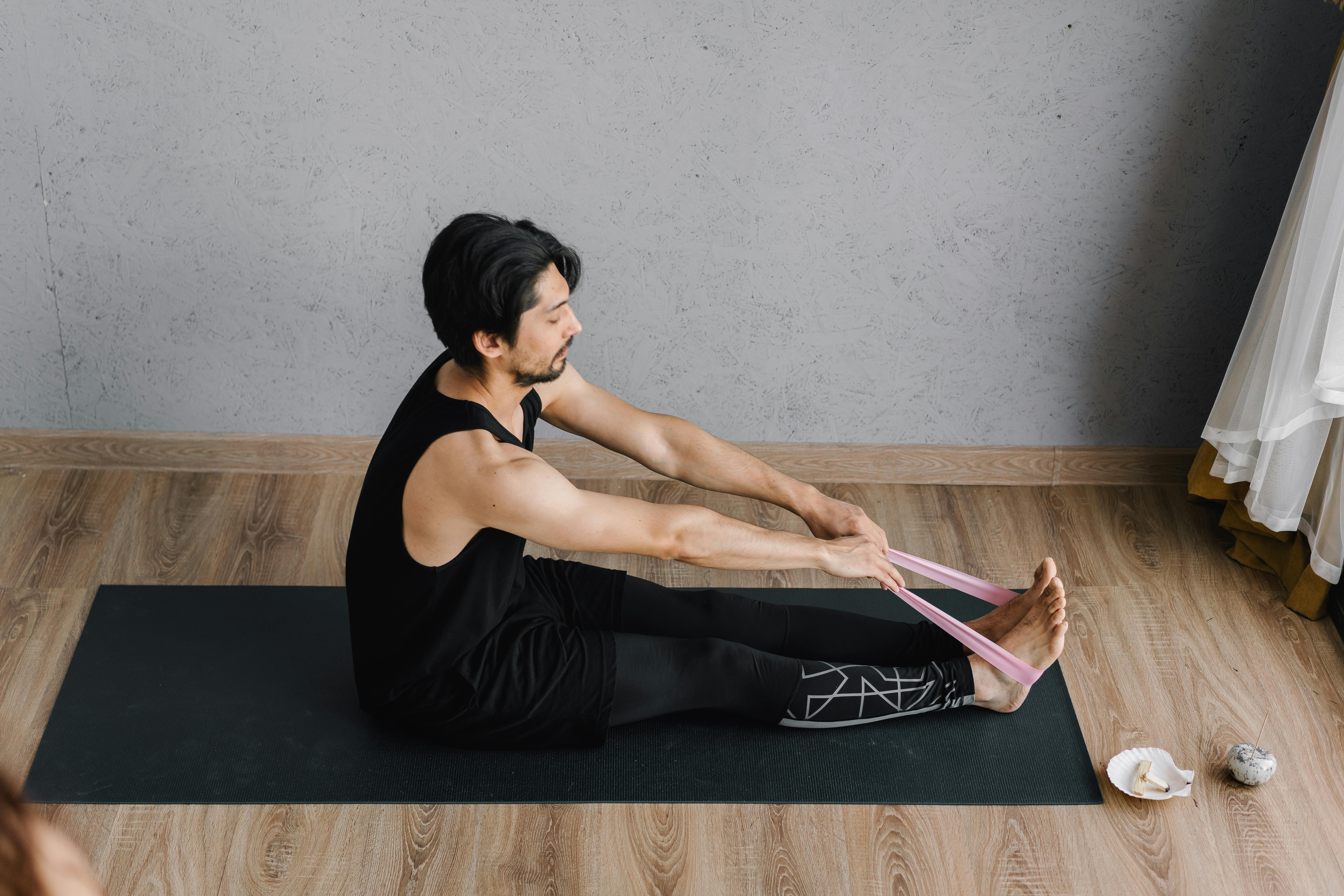
Bed, Chair, Door: A Safe Hotel Room Workout Routine. You land late, you are hungry, and the hotel gym is either closed or packed. But your body is tight from the flight, and you know that maintaining exercise while traveling is challenging, so if you skip it again, the week will get away from you.
That is where a simple resistance band workout routine for hotel rooms saves the day. All you need is a basic band, prized for its portability, and the furniture already in the room: the bed, a chair, and the door.
In this guide, I will walk you through how I check each piece of furniture, set up safe anchor points, and build a quick full-body travel workout that respects hotel limits, walls, and your energy. This style of workout pairs perfectly with short plans like my 15-minute travel routine in Simple Workouts for Busy Professionals.
Here is a solid video example if you like to see band moves in a hotel space before you try them yourself:
Key Takeaways
- Hotel furniture is not gym gear, so a fast safety check comes first every time.
- The bed is excellent for support and comfort, but it isn’t safe for resistance band exercises.
- A sturdy chair can serve as your central station for upper- and lower-body work.
- Only use solid, locking doors as anchors, and always stand on the safe side.
- A 10 to 15-minute, well-planned circuit in minimal space can help you maintain training consistency, keeping you strong, mobile, and lean while you travel.
What I Check First Before Any Hotel Resistance Band Workout
When I walk into a hotel room, I think like a cautious mechanic. Before I press the gas, I pop the hood.
Hotel furniture was built for sitting and sleeping, not for hard pulls and loaded pushups. If you are a guy over 30 with work stress and tight joints, the last thing you need is a chair that slips or a band that snaps.
I use a simple pre-workout checklist I can run even when I am tired, even at almost midnight.
Quick Safety Checklist for Any Hotel Room
Here is the checklist I run before I unpack my bands:
- Floor check
I look for wet spots, loose rugs, or smooth shiny patches that feel slippery. If socks slide, I switch to bare feet or training shoes. - Space check
I stand in the open area and sweep my arms in a big circle. If I hit a lamp, TV, or ceiling fan, I pick a new spot or change the move. - Band condition
I run my fingers along the resistance band, especially when using resistance bands with handles. I check for cracks, thin spots, or cuts. Any damage, and that band goes in the trash, not in my workout. - Ceiling height
For overhead presses or pulldowns, I make sure I can press my arms straight up without hitting the ceiling or sprinklers.
This takes about 10 seconds, but it can save your shoulders, your head, and your deposit.
How I Test Furniture So It Does Not Move or Tip
Next, I test the gear I am about to trust: the bed and the chair.
For the bed:
- I push the side of the bed hard with my hip. If it slides on wheels, I make it back against the wall so it cannot roll.
- I avoid using loose headboards or footboards as anchors. Many are barely bolted on.
For the chair:
- I pick the heaviest-looking chair with solid legs, no wheels, if I have a choice.
- I sit, then rock side to side and gently from front to back.
- I grab the backrest and pull, then push, to see if anything wobbles or squeaks.
If the only chair has wheels, I push it all the way against a wall so it cannot roll back when I sit or pull.
For the door:
- I only trust the main entry door, not the bathroom or a sliding closet.
- I check that it closes all the way, catches, and ideally locks or latches.
- I avoid glass doors or light hollow doors; they are not built for loaded pulls.
Loose headboards, wobbly desk chairs, and sliding closet doors all get in the way of my workout.
Band Safety: Anchors, Angles, and Your Body Position
Bands seem light, but they offer variable resistance, hitting hardest where they stretch the most. Angle and distance change everything.
Here is how I keep band work safe:
- I start with a lighter band than I think I need for the first round.
- I stand in a stable stance, feet about hip-width, and keep my knees soft.
- I line up my joints. For bent-over rows, my wrists, elbows, and shoulders stay in the same plane instead of flaring all over the place.
My rule: if the band rubs a sharp edge on the bed frame or door, I change the setup. Constant friction weakens bands fast and raises the risk of a snap.
Short, smart travel sessions count as real resistance training. Full-body band work aligns with research on practical exercises to reduce belly fat, which emphasizes using major muscle groups rather than just the abs.
If you want more structure for programming these short sessions across a busy month, I share templates and tweaks in the Fit With Greg email newsletter.
How I Use the Bed for Safe Seated and Lying Band Exercises
I treat the bed like a soft mat, not a squat rack.
After a long flight, I want my spine and hips to be well-supported. The bed lets me train without dropping to a hard floor, which is nice when your knees and lower back already feel cranky.
Most hotels have softer mattresses. That changes the balance, so I slow everything down and think about control.
Best Bed Positions for Core, Glutes, and Upper Back
Here are my go-to moves using the bed with a resistance band that target the lower body and core:
1. Glute bridges with a band
- Loop resistance bands around both legs, just above the knees.
- Lie on your back with your feet on the bed, hip-width, knees bent.
- Press your knees gently out into the band as you lift your hips.
I keep my ribs down and aim for a straight line from shoulders to knees. This wakes up the glutes that go numb from sitting.
2. Dead bug core work
- Lie on your back, arms straight up, hips and knees at 90 degrees.
- Loop a light band around your feet, and hold the other end in your hands.
- Slowly extend opposite arm and leg while keeping your back flat and maintaining strong core engagement.
This is far safer on a soft bed than fast sit-ups that yank on the neck.
3. Seated rows on the bed
- Sit near the edge, with your feet on the floor, and loop the band around both feet.
- Sit tall, chest up, and row the handles or band ends toward your ribs.
If the mattress is very soft, I scoot closer to the edge or plant my feet wider, so I do not sink and round my lower back.
Bed Moves I Avoid So I Do Not Strain My Back or Neck
I skip the flashy stuff on hotel beds:
- Fast band sit-ups on a soft bed that fold your spine hard.
- Heavy resisted leg lifts that tug on the lower back.
- Explosive hip thrusts or bridges that slam the mattress and make it shift.
Most men over 30 already feel their backs and necks from laptops and long drives. I stick with optimal sets and repetitions, steady breathing, and tension I can control.
For more ideas on safe, full-body training that hits fat loss without beating up your spine, I break down my approach to efficient fat-loss workouts without crunches.
How I Turn a Hotel Chair Into a Safe Mini Gym
If I had to pick just one piece of hotel furniture for resistance band work, I would choose the chair.
The right chair gives me a safe zone for a full-body session:
- A stable base for presses and rows.
- A target for squats and sit-to-stands.
- A balance point for band walks and single-leg work.
I care more about stability than comfort here.
Choosing and Testing the Right Chair in Your Room
My chair checklist is simple:
- No wheels if I can avoid it.
- Four solid legs that sit flat on the floor.
- A backrest that feels sturdy when I pull on it.
I sit, then shift my weight side to side, then forward and back. Next I press down on the armrests or seat and pull on the backrest. If anything creaks or rocks, I pick a different chair.
If the only option is a rolling desk chair, I wedge it tight against the wall before using it.
Upper Body Exercises With Bands and a Chair
My favorite upper body moves with a chair are:
Seated rows
- Sit tall on the front edge, band looped around both feet.
- Pull the band toward your lower ribs, and squeeze your shoulder blades.
Seated bicep curl
- Sit tall on the front edge, band looped around both feet.
- Curl the handles toward your shoulders with elbows tucked.
Seated overhead press
- Sit tall, band under your hips or feet.
- Press the handles straight up without arching your back.
Face pulls (only with a sturdy chair)
- Wrap the band around the back of the chair at face height.
- Sit or stand, pull the band toward your nose with elbows high.
I keep my shoulders down, neck long, and ribs stacked. The goal is smooth tension, not jerky reps.
Leg and Glute Exercises Using the Chair for Balance
Long meetings and flights shut down the hips. I use the chair to wake them up:
- Banded squats to the chair: band above the knees; tap the chair on each rep to keep depth consistent.
- Banded lateral walks: band at the ankles or above the knees, light hold on the chair for balance.
- Stationary lunges: light hold on the chair for balance, step one foot forward and lower into a lunge, then alternate.
- Single-leg sit-to-stand: light band around the thighs; stand up from the chair on one leg, then sit back slowly.
These moves fit nicely into 10 to 15-minute blocks for efficient exercise while traveling, like the routines I share in my workouts for busy professionals, a simple 15-minute plan.
How to Safely Use the Hotel Door as a Band Anchor
This section outlines the proper setup for key resistance-band exercises. The door is powerful, but it demands respect. A bad setup can send a resistance band straight at your face.
I only use the door for band work when I can set it up by the book.
Door Safety: Which Doors I Trust and How I Test Them
My rule: only the main room door.
I like solid, heavy doors that close fully and lock. I avoid bathroom, balcony, or sliding closet doors.
Setup:
- Put the anchor or band on the hinge side or the top of the door.
- Close the door firmly and lock or latch it if possible.
- Stand on the side where the door closes toward your body so any force pushes the door shut, not open.
Then I do a “pull then push” test on the band from a short distance. If the door or frame moves, I stop and pick another move.
Safe Door Anchor Placement for Common Band Exercises
Here is how I place the band for different patterns:
- Top of the door: lat pulldowns and triceps pressdowns.
- Mid-height (chest level): rows and chest presses, ideal for resistance bands with handles.
- Bottom of the door: biceps curls and standing kickbacks.
The door must stay fully shut the whole time. I never share a door anchor with someone who might open the door from the other side.
Upper and Lower Body Moves I Do with a Door Anchor
With a solid door, my menu is simple:
- Chest press: band at chest height behind you, step forward, press like a pushup.
- Rows: band at mid-height in front of you; step back. This door anchor setup is perfect for a standing bent-over row.
- Lat pulldown: band at the top of the door, kneel or sit, pull elbows toward ribs.
- Triceps pressdown and kickbacks: band high, elbows tucked close, extend the arms down.
- Biceps curls: band low, step back, curl while keeping elbows near your sides.
- Glute kickbacks: band low, loop around one ankle, hold the door frame or chair, and press the leg back.
I step out just far enough for steady tension, not so far that I have to yank and risk moving the door.
Putting It All Together: A Simple 15 Minute Hotel Band Workout
Once you know how to use the bed, chair, and door safely, you can turn any room into a small training zone.
Here is a simple 15-minute routine you can use on any work trip.
Warm Up in 3 Minutes With No Noise and No Equipment
I like a quiet warm-up up so I do not bother neighbors:
- 45 seconds of marching in place with arm swings.
- 30 seconds of gentle arm circles forward, then 30 seconds backward.
- 30 seconds of hip circles each way.
- 45 seconds of easy bodyweight squats to the chair.
- 30 seconds of ankle rolls, both sides.
Breathe through your nose if you can and move joints through a full, smooth range.
Complete Body Circuit Using Bed, Chair, and Door
Set a timer for optimized sets and repetitions of 40 seconds of work, 20 seconds of rest. Do 2 or 3 rounds.
- Bed glute bridge with looped resistance bands (bed)
- Seated row with resistance band around feet (chair)
- Banded squats to the chair (chair)
- Door anchor chest press at mid-height (door)
- Door anchor standing kickbacks for glutes (door)
On each move, I focus on three cues:
- Slow down the last third of the lowering phase.
- Keep the neck long and shoulders relaxed.
- Maintain light tension in the core, as if bracing before a soft punch.
This full-body workout provides a full-body session that hits all major muscle groups and aligns with the style of strength training for busy schedules I use for fat loss and muscle.
Cool Down and Stretching So You Sleep Better After Travel
A short cool-down helps switch your body out of work mode.
I like:
- Light band-assisted chest stretch by the door or chair.
- Band pull-aparts for the upper back, very gentle.
- Seated hamstring stretch on the bed, with or without the band.
- Standing hip flexor stretch, using the chair for balance.
I hold each stretch for 20 to 30 seconds and focus on slow, deep exhales. A calm nervous system supports sleep, which is a big player in weight control, according to guides like Mayo Clinic’s overview of belly fat and health risks.
If you like having a new travel-friendly idea in your inbox each week, I send simple templates and tweaks in the Fit With Greg newsletter sign-up.
Conclusion
With a clear safety check and a few smart moves, a resistance band, the bed, a solid chair, and a locked door can turn any hotel room into a safe mini gym.
You do not need long sessions or fancy machines. 10 to 15 focused minutes allow for consistent resistance training while traveling, keeping your joints happy, your muscles active, and your waistline moving in the right direction, especially when paired with simple plans like my 15-minute workouts for busy professionals.
This focused hotel-room workout routine is highly effective. Save this layout to simplify your next travel workout, keep your band in your carry-on, and the next time you drop your bag in a strange room, you will know exactly how to run a fast, safe routine.
If you want steady ideas without overthinking, join the Fit With Greg email newsletter to build a travel routine that fits real work, real life, and exercise while traveling.