
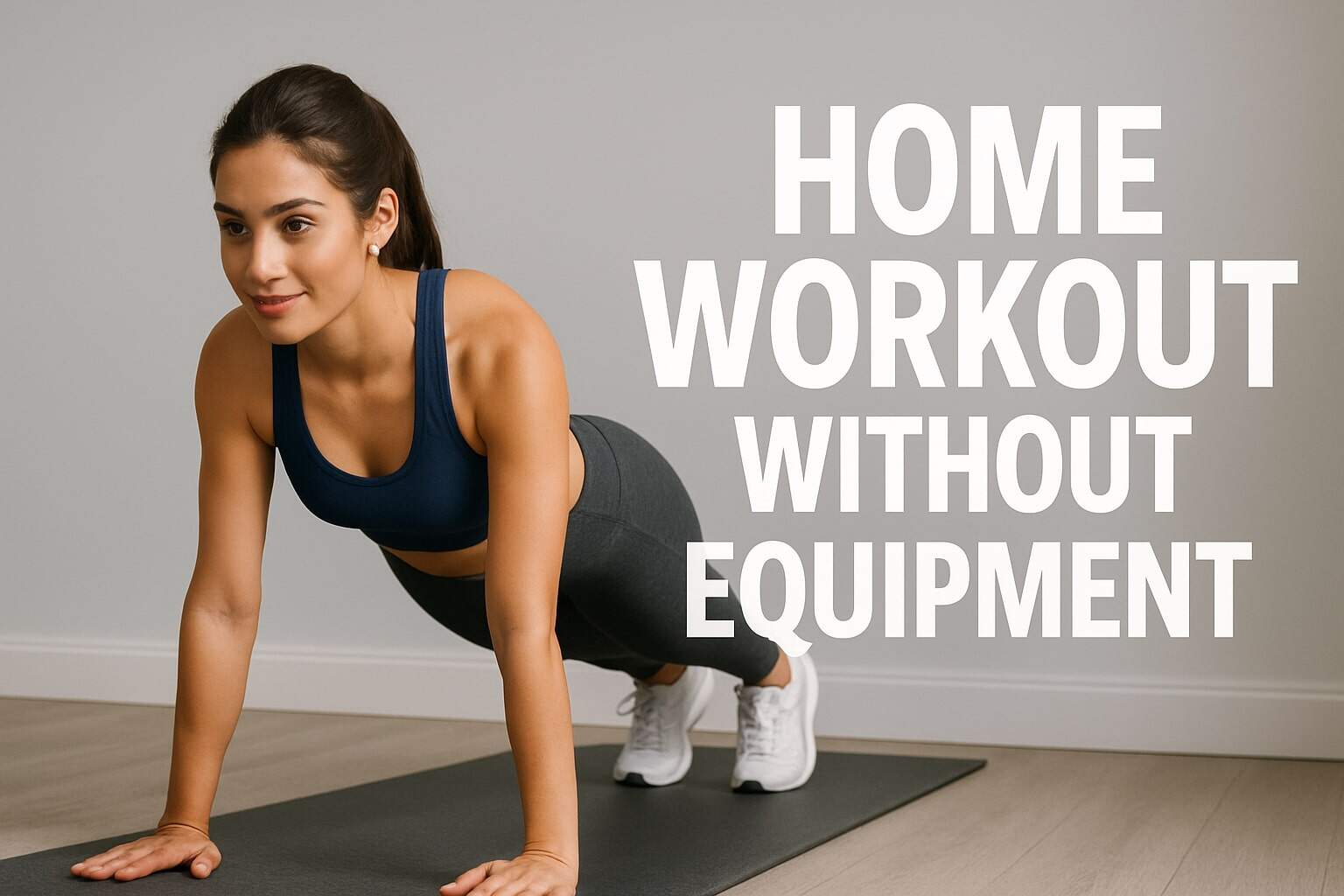
This guide focuses on realistic home workouts that fit real life — short sessions, flexible plans, and routines you can actually stick with even when your week gets messy.
If you’re over 30, you probably don’t need another “get shredded in 28 days” plan. You need realistic home workouts that fit real life, the kind you can do when work runs late, your kid wakes up early, or your energy is hanging on by a thread.
To me, “fits real life” means the workout is flexible, short enough to start without drama, has a low setup, and is still effective. It respects your space, your neighbors, your joints, and your brain. It doesn’t require a perfect schedule or a loud playlist to make you feel like a fitness person.
Research shows that shorter, well-structured sessions can still be effective for strength and consistency, especially when adherence is high.
I share realistic routines and recovery guidance in my fitness newsletter for busy people, along with a free 7-Day BODi Trial Blueprint.
Why Realistic Home Workouts Actually Fit Real Life
Realistic home workouts work because they’re designed around time limits, energy fluctuations, and imperfect schedules — not ideal conditions that rarely exist.
In this post, I’m going to show you how I pick workouts based on time, space, noise, and equipment, even when motivation is missing. If your barriers are “no time,” “too tired,” “small apartment,” or “I don’t want to wake anyone up,” you’ll walk away with practical fixes and a few repeatable templates you can lean on.
Key Takeaways
When my schedule gets messy, these are the rules that keep me training anyway:
- Consistency beats intensity, especially at home, where friction is high.
- I choose workouts based on time, energy, stress, and noise, not on guilt.
- I start with a 2-minute on-ramp, so getting going feels almost automatic.
- I rotate three simple templates: strength, quiet conditioning, and mobility plus core.
- I make my setup easy, so the workout starts in seconds, not 15 minutes.
If your routine keeps breaking down, this fitness approach for busy people explains how to build workouts around your real schedule rather than perfect plans.
Table of Contents
My simple rule for making home workouts stick is to make them smaller and easier to start
The biggest difference between people who “work out at home sometimes” and people who actually build momentum is not willpower. It’s the start.
At home, the workout has to compete with your couch, your inbox, and your to-do list. If the plan feels big, your brain will negotiate. If the plan feels easy to begin, you’ll often keep going once you’re moving.
That’s why I use a “minimum effective dose” mindset. I aim for the smallest session that still gives me a real training signal, then I leave room for life. You don’t need to crush yourself. You need to repeat something often enough for your body to adapt.
If you want extra exercise ideas without equipment, I like Nerd Fitness’s practical roundup of at-home workout routines that don’t require a gym, because it supports the same idea: start simple, then build.
Before I pick a workout, I do a quick reality check. This takes 20 seconds, and it stops me from choosing a plan that doesn’t match my day:
- Time today: 10, 15, 20, or 30 minutes?
- Energy level: 1 to 5 (more on that below).
- Space: Can I extend my arms without hitting anything?
- Noise: Can I jump, or do I need quiet?
- Equipment: bodyweight only, bands, dumbbells, bench?
This checklist is my guardrail. It keeps me from making the classic mistake of choosing a hard workout, skipping it, and feeling behind.
I pick a workout based on time, energy, and stress, not just a plan
I still like a plan. Plans reduce decision fatigue. But I don’t follow a plan like it’s a law. I follow it like it’s a map, and I take a different route when traffic hits.
Here’s the simple energy scale I use:
| Energy level (1-5) | How I feel | What I do at home |
|---|---|---|
| 1 | wiped out, brain fog | 8 to 12 minutes mobility plus core, easy pace |
| 2 | tired, low drive | 10 to 15 minutes quiet strength circuit, no jumping |
| 3 | normal, can focus | 20 minutes full-body strength, steady sets |
| 4 | good, ready to work | 25 to 30 minutes strength plus a short finisher |
| 5 | fired up | longer session, or harder weights, still clean form |
Same person, different day, different session. That’s not failing. That’s smart training.
A real-life week might look like this:
- Monday (energy 3): 20 minutes full-body strength.
- Wednesday (energy 2): 12 minutes quiet circuit while the house is asleep.
- Friday (energy 4): 30 minutes strength with a small conditioning finish.
- Sunday (energy 1): mobility and core reset to avoid Monday-related pain.
If your day is high stress, I also downshift. Stress is a real load. Sleep debt is a real load. When I ignore those, I end up sore, cranky, and inconsistent.
I make the first 2 minutes so easy that I cannot talk myself out of it
My rule is simple: if I can’t start, the workout doesn’t exist.
So I use a 2-minute on-ramp that needs no equipment and almost no space:
- March in place for 30 seconds (easy breathing).
- Shoulder circles for 20 seconds (slow and smooth).
- Bodyweight squats for 30 seconds (small range is fine).
- Wall pushups for 20 seconds.
- Hip hinge pattern for 20 seconds (hands on thighs, push hips back).
That’s it. Two minutes. The goal is not to “warm up perfectly.” The goal is to lower the friction so much that my brain stops arguing.
Busy morning tip: I do this before coffee. If I wait until after I sit down, the day starts dragging me around.
After-work tip: I change clothes first, even if it’s just a different shirt. It’s a tiny signal that says, “Now I’m doing the next thing.”
Most days, the on-ramp turns into the full session. Some days it doesn’t, and I still count it as a win because it protects the habit.
The 3 home workout templates I use most, and when each one works best
When life is busy, I don’t want 27 different workouts. I want three templates that cover almost every situation and keep me progressing.
These are the ones I come back to:
- Short full-body strength
This is my best “results per minute” option. It supports fat loss, muscle growth, and a sense of capability. - Low-impact conditioning (quiet)
This is how I get my heart rate up without stomping, jumping, or annoying my knees. - Mobility plus core reset
This is my “I’m stiff and cooked” session. It helps my back, hips, and posture, and it keeps me from skipping the whole week.
If you want a wide range of home workout moves, Healthline’s list of at-home workout moves can be handy. I treat lists like that as a library, then I plug a few moves into one of my templates instead of trying to do everything.
The 15-minute full-body strength session for “I have no time” days
This is the structure I use when time is tight: a squat pattern, a push, a pull, a hinge, then a carry or core.
I keep it simple:
- Pick 4 to 5 moves.
- Do 2 to 3 rounds.
- Stop 1 to 2 reps before form breaks.
- Rest just enough to keep moving well.
If you want a ready-made version, I use this as my go-to reference: 15-minute full-body dumbbell workout.
Progression over weeks is boring on purpose. I track one small win each session: one more rep, a slightly heavier dumbbell, or slower control during the lowering. If you want a deeper guide for that, this helps: progressive overload with home dumbbells.
The quiet, joint-friendly workout for apartments, sleeping kids, and sore knees
Noise is a real barrier. So are creaky knees. The fix is not “suck it up and jump anyway.” The fix is to choose a quiet circuit that still requires effort.
Here’s a low-noise circuit I like. I keep everything controlled, no slamming feet:
- Slow tempo squats (3 seconds down, stand up smooth)
- Glute bridges (pause 1 second at the top)
- Incline pushups (hands on a counter or sturdy chair)
- Dead bug (slow exhale, keep low back gently pressed down)
- Step-back lunges (soft steps, no stomp)
I’ll do 2 to 4 rounds depending on time and energy. It feels harder than it looks because the tempo removes momentum.
To reduce noise, I use a few simple tricks: train on a mat, wear soft shoes (or go barefoot if stable), and set the weights down like I’m trying not to wake anyone. If you’re building a quiet setup, this guide is useful: quiet apartment workout setup.
If your knees need even friendlier options, Health.com has a helpful overview of bodyweight exercises to build strength. I often borrow a couple of those and keep the same quiet template.
I share realistic routines and recovery guidance in my fitness newsletter for busy people, along with a free 7-Day BODi Trial Blueprint.
The back-friendly strength plan when sitting all day is wrecking me
When I sit for a long time, I feel it in my hips and lower back. For me, the answer is not endless stretching. Its strength lies in good positions.
I focus on:
- Bracing: ribs down, breathe into the belly, tighten like I’m about to cough.
- Hinge pattern: hips move back, spine stays neutral.
- Glutes and upper back: strong hips and strong back muscles take pressure off the lower back.
Simple cues I repeat: “Move slow.” “Stay long.” “Stop if it’s sharp pain.” I’m okay with muscle burn. I don’t push through pinching, shooting pain, numbness, or anything that feels wrong.
If you want a full set of dumbbell options, this is my best starting point: safe at-home back exercises with dumbbells.
I set up my space and gear so working out feels automatic
The hidden killer of home workouts is setup. If it takes 12 minutes to clear a spot, find the weights, and figure out what to do, you’ll “do it later.” Later becomes never.
So I make my space boring and ready:
- I keep a small open zone (even a 6-by-6-foot square works).
- I store gear where I can grab it in seconds.
- I keep one simple default workout on my phone notes.
I also like a “good, better, best” approach for equipment. No pressure, just options:
| Level | What I use | Why it helps |
|---|---|---|
| Good | a mat, one pair of dumbbells, a band | low cost, fast setup |
| Better | adjustable dumbbells, sturdy mat | easy progression, less clutter |
| Best | adjustable dumbbells plus a bench | more exercise options, smoother sessions |
You don’t need a full home gym. You need fewer decisions.
If I could only buy one thing, I would start with adjustable dumbbells
If your goal is to build strength and change your body at home, adjustable dumbbells are hard to beat. They save space and make it easy to change weight quickly, which matters when you’re training in short time windows.
My quick “how heavy should I get” rule of thumb:
- For presses and raises, you’ll use lighter weights.
- For rows, you can usually go heavier than you do on presses.
- For squats and hinges, you’ll want your heaviest option.
If you’re shopping for a small space, this guide breaks it down well: best adjustable dumbbells for small spaces.
A simple weight bench makes strength workouts feel smoother and safer
A bench isn’t required, but it makes the home feel stronger and more comfortable. I like it for:
- pressing angles (flat and inclined)
- supported rows (less stress on the lower back)
- step-ups and split squats (clean setup, less wobble)
When I look for one, I prioritize stability. If it rocks, I don’t want it. I also like a bench that stores easily, especially if your workout space is also your living space.
If you want practical picks and what to watch for, this is the guide I point people to: “Best Weight Benches for Home Gyms.”
FAQ
How many days per week do I need for results?
If I’m honest, 2 to 4 days per week is the sweet spot for most busy adults. Two days build momentum, three days build change faster, four days is great if recovery is solid.
How many days per week do I need for results?
f I’m honest, 2 to 4 days per week is the sweet spot for most busy adults. Two days build momentum, three days build change faster, four days is great if recovery is solid.
Are 10 to 15-minute home workouts actually effective?
Yes, if they’re focused. A short, consistent full-body strength session beats a random 45-minute workout you only do twice a month. If you need ideas for strength moves at home, Today.com has a clear list of full-body exercises.
Are 10 to 15-minute home workouts actually effective?
Yes, if they’re focused. A short, consistent full-body strength session beats a random 45-minute workout you only do twice a month. If you need ideas for strength moves at home, Today.com has a clear list of full-body exercises.
What if I live in an apartment and can’t jump?
I skip jumping and use tempo, holds, and controlled steps. Quiet training can still get hard fast if you slow down and keep rest short.
What if I live in an apartment and can’t jump?
I skip jumping and use tempo, holds, and controlled steps. Quiet training can still get hard fast if you slow down and keep rest short.
What should I do when I’m too tired?
I switch to the mobility plus core reset, or I do the 2-minute on-ramp and decide after. On low-energy days, showing up is the win.
What should I do when I’m too tired?
I switch to the mobility plus core reset, or I do the 2-minute on-ramp and decide after. On low-energy days, showing up is the win.
I share realistic routines and recovery guidance in my fitness newsletter for busy people, along with a free 7-Day BODi Trial Blueprint.
Conclusion
Real life doesn’t reward perfect workout plans; it rewards the plans I can repeat when the week gets messy. I keep home workouts that actually fit real life by starting small, using one of my three templates, and making setup so easy it feels automatic.
My next step is simple: pick a default 15-minute weekday workout, pick a quiet option for low-noise days, and schedule one longer session when I can. Then I track one thing that matters, sessions completed per week, and I let that be enough.
3 thoughts on “Realistic Home workouts that fit real life (and don’t fall apart by Thursday)”