
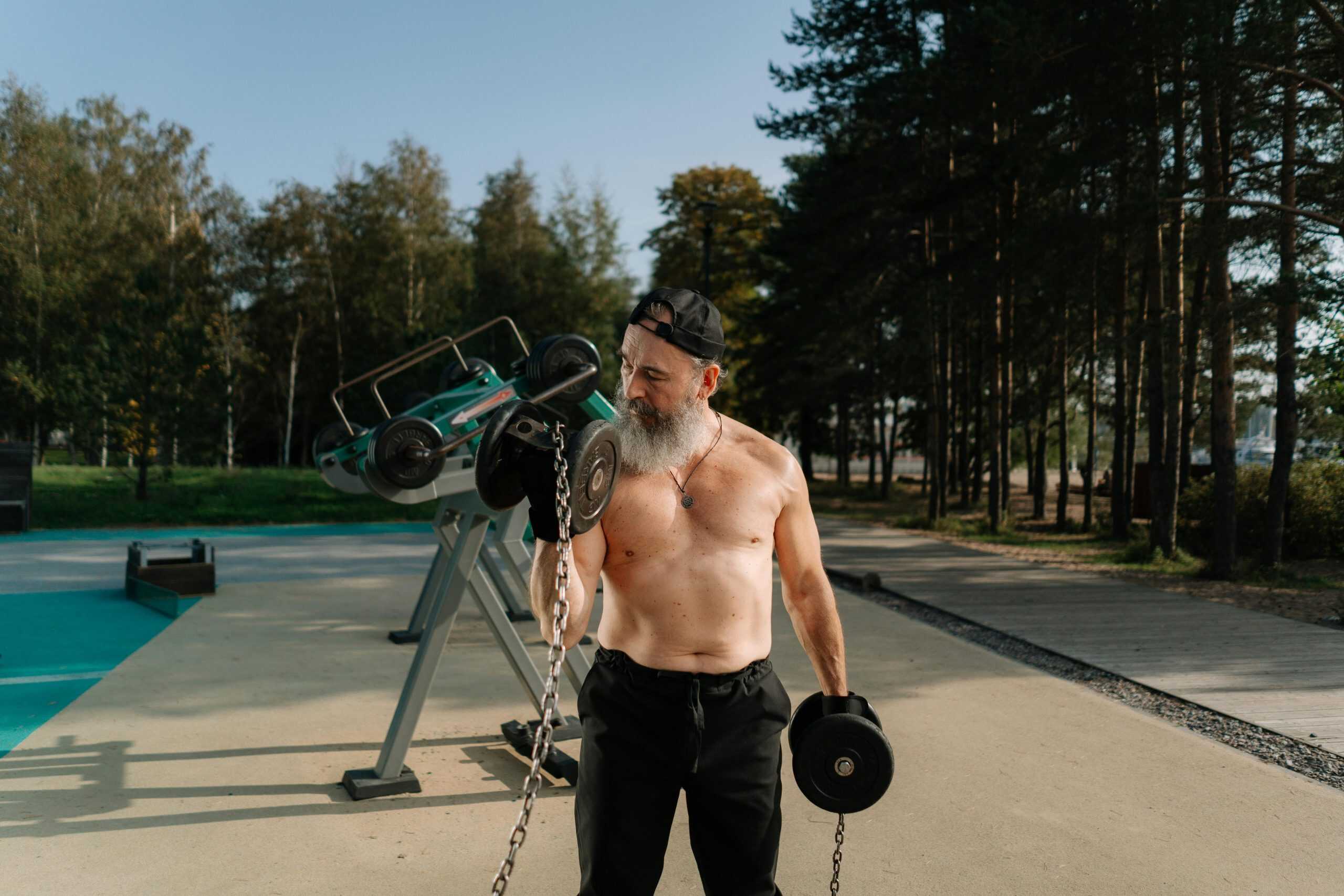
Can Men Over 60 Still Build Muscle? The Beginner Dumbbell Guide. Yes, you can still build muscle after 60. You may feel stiff, out of shape, or a little unsure where to start, but your body can still build muscle with an innovative strength training plan and some patience.
This guide is written for men over 60 who want simple, joint-friendly dumbbell workouts they can actually stick to. No fancy machines, no complex routines, just clear steps that protect your shoulders, knees, and back while you build strength.
We will focus on short, practical workouts you can do at home. If you want a time-saving option for busy days, you can also use a quick plan like the 15-minute workout for busy professionals to stay consistent even when life gets in the way, supporting your physical health. By the end, you will know exactly how to start and how to keep going.
This is your plain-language answer to “can men over 60 still build muscle? the beginner dumbbell guide” in one place.
Get weekly fitness tips in your inboxTable of Contents
Key Takeaways
- Yes, you can gain muscle after 60, but you need patience, consistency, light-to-moderate weights, and steady habits.
- Dumbbells are ideal for older men because they are joint friendly, simple, and perfect for home workouts.
- Two or three dumbbell sessions per week are enough to build strength when you are consistent.
- Good form, slow progress, and smart recovery matter more than lifting heavy weights.
- The main goal is staying independent, strong with muscle tone, and confident, not looking like a 25-year-old bodybuilder.
Can Men Over 60 Still Build Muscle? What Science Really Says
As we age, we naturally experience muscle mass loss. This slow muscle mass loss has a name, sarcopenia. You might feel it when climbing stairs feels harder than it used to, or when carrying groceries leaves you more tired.
The good news is simple. Your muscles still respond to strength training at any age. Studies on older adults show that even older adults in their 70s, 80s, and 90s can gain strength and muscle when they train a few times per week and eat enough protein to support muscle repair.
Think of your muscles like a car that has been sitting in the garage. It may feel rusty at first, but if you start it, drive it gently, and keep up with basic care, it still runs well. Your body works the same way. You just need to treat it with respect and give it time.
Progress after 60 is real, but it is not instant. You trade fast gains for safer, steadier ones. That trade is worth it.
How Muscle Changes After 60 (And Why That Is Not the End)

Photo by Anna Shvets
After 60, age-related changes tend to happen:
- Hormones that support muscle drop, contributing to age-related sarcopenia.
- Joints may feel stiff, sore, or cause joint pain.
- Balance and coordination may not be what they used to be.
- Recovery from hard efforts takes longer.
That can sound rough, but it is not the end of strength. It just means the old “go hard or go home” style is not your plan anymore.
Your muscles are like a lawn that got ignored for a season. Weeds show up, grass looks thin, but when you water it and care for it, growth returns. When you use your muscles on a regular basis, with resistance like dumbbells, they respond.
Even small gains matter. A little more leg strength can help you:
- Get out of a low chair without pushing off your knees.
- Climb stairs without stopping halfway.
- Get up off the floor if you need to.
These are the wins that keep you living the life you want.
Real Benefits of Building Muscle After 60
Building muscle after 60 is not just about looks. It is about daily life. Some key benefits include:
- Better balance and fewer falls: Strong legs and hips help you catch yourself when you trip.
- Stronger bones: Strength training gives your bones a reason to stay dense and sturdy.
- Better blood sugar control: Muscles act like a sponge for blood sugar, which can support diabetes control.
- More energy: Everyday tasks feel lighter when your body is stronger.
- Better posture and less back pain: Strong back and core muscles help you stand taller and reduce strain.
- More confidence: There is a quiet pride in knowing you can carry your own bags or play with grandkids on the floor.
Dumbbell training fits directly into these goals. When you do rows, presses, squats, and carries, you are training the same movements you use to lift groceries, push a door open, or pick up a grandchild. Training and proper nutrition are essential for these results, especially with adequate protein to aid muscle repair.
What Is Realistic Muscle Gain for Men Over 60?
If you start today as a beginner, you can usually feel a difference within 3 to 4 weeks. Stairs feel easier. You stand up more smoothly. Your grip gets firmer.
Visible changes, like a bit more size in your arms or shoulders, usually show up over a few months of steady work. It is slower than it was at 30, but it still happens.
The main goals in this stage of life are:
- Move with less pain.
- Stay independent and active.
- Keep doing the things you care about, from travel to hobbies to family time.
Looking leaner and more muscular is a nice bonus. Function comes first.
Beginner Dumbbell Basics for Men Over 60
Dumbbells are one of the best tools for older men who want safe strength training at home. You can start with light weights, adjust how hard each exercise feels, and avoid the stress that heavy barbells can put on your joints.
They also take up very little space. A couple of pairs in the corner of a room can cover your whole routine. If you want help picking joint-friendly options, check out this best dumbbells for men over 60 buying guide. It explains grip comfort, safe weight ranges, and simple choices that work well at home.
The theme in this section is simple: comfort, safety, and ease of use.
How to Choose the Right Dumbbells for an Older Body
When you pick starting weights, lighter is almost always better than you expect.
A simple starting point for many men over 60 allows comfortable sets and reps:
- Upper body (arms, shoulders): 5 to 10 pounds per hand.
- Lower body (squats, deadlifts): 10 to 20 pounds per hand.
If this still feels heavy on your joints, drop down. Your ego does not get a vote here. Your shoulders and knees do.
A few points to keep in mind:
- Handle comfort: Choose a handle that does not dig into your palms. Rubber or slightly thicker handles can feel better on older hands.
- Grip: If your grip is weaker, go with a size you can hold for 30 seconds without strain.
- Adjustable vs fixed: Adjustable dumbbells save space and money, but fixed pairs are often simpler and easier to grab and go.
You can always buy heavier weights later when your body is ready.
Must Know Safety Tips Before You Pick Up a Dumbbell
Safety is the base of every workout, especially after 60. A few simple rules:
- Warm up for 5 to 10 minutes with light walking, marching in place, or gentle arm circles. This warm up prepares your muscles and joints.
- Move slowly and with control, no jerking or swinging.
- Breathe out as you lift, breathe in as you lower. Do not hold your breath.
- Keep your space clear so you do not trip on clutter.
- Stop if you feel sharp or sudden pain.
Normal training effort feels like burning muscles, heavy breathing, and maybe some mild soreness the next day. Bad pain feels sharp, stabbing, or like something is catching or grinding inside a joint.
If you have heart disease, joint replacements, or other serious issues, talk with your doctor before you start. Your goal is confidence, not fear.
How to Use Proper Form Without Feeling Like a Gym Expert
You do not need a degree in exercise science to use proper form. A few simple cues go a long way:
- Stand tall, as if a string is gently pulling your head up.
- Gently tighten your belly, as if bracing for a light punch.
- Keep knees and toes pointing in the same direction.
- Move through a pain-free range of motion to support mobility. Stop before a joint feels wrong.
Practice each move first with no weight or the lightest weight you own. Use a mirror or set your phone to record you from the side. When you see yourself, it is easier to notice if you are slouching or rounding your back.
The Beginner Dumbbell Workout Plan for Men Over 60
This section is the heart of “can men over 60 still build muscle? the beginner dumbbell guide.” Here is where it turns into action.
You will use a simple full body plan 2 or 3 days per week. Each session will take about 20 to 30 minutes. On busy days when you are short on time, you can pair this plan with a quick routine like the 15-minute workout for busy professionals so you never skip training completely.
How Often Should Men Over 60 Lift Dumbbells?
For most beginners over 60, 2 or 3 strength sessions per week works well. Your muscles need time to recover, so you do not want to lift hard every day.
A simple weekly layout could look like this:
DayPlanMondayDumbbell workout ATuesdayLight walk or restWednesdayDumbbell workout AThursdayLight walk or restFridayOptional third dumbbell workoutSaturdayActive fun (walk, yard work)SundayRest and recovery
You can start with 2 days per week. When that feels easy and your recovery is good, you can add a third day if you like. Remember, consistency through steady work for months beats any short burst of extreme effort.
Simple Full Body Dumbbell Exercises That Are Joint Friendly
Here are beginner-friendly dumbbell exercises, including compound movements like squats and rows, that train your whole body and carry over to daily life:
- Goblet squat or sit-to-stand: Hold one dumbbell at your chest or use only body weight. This trains your legs for standing up from chairs and climbing stairs.
- Dumbbell row: One hand and one knee on a bench or chair, pull a dumbbell toward your hip. This builds your back and helps with posture and pulling tasks.
- Chest press or floor press: Lying on a bench or the floor, press dumbbells up from chest level. This helps with pushing, like getting up from the ground or pushing a door.
- Seated or standing shoulder press: Light dumbbells pressed overhead. This helps with reaching overhead, like putting items on a shelf.
- Hip hinge or Romanian deadlift: With dumbbells at your thighs, push your hips back and lower the weights down your legs, then stand up. This trains your hamstrings and glutes for bending over safely.
- Biceps curl: Simple curls help with lifting bags or holding items for longer.
- Farmer carry: Hold dumbbells at your sides and walk. This is like carrying grocery bags and builds grip, core, and overall stability.
To make moves easier, you can use a chair for balance support, use lighter weights, or do fewer reps. To make them harder, you can slow down each rep, add a few more reps, or use slightly heavier weights.
Sample Beginner Dumbbell Routine for Men Over 60
Here is a simple routine you can start with. Do this 2 or 3 days per week.
Warm up
5 to 10 minutes of easy walking, arm circles, and gentle leg swings.
Main workout
Aim for 2 to 3 sets and 8 to 12 reps per set of each exercise. Rest 1 to 2 minutes between sets.
- Goblet squat or sit-to-stand
- Dumbbell row (each arm)
- Floor or bench chest press
- Seated shoulder press (light weight)
- Hip hinge or Romanian deadlift
- Biceps curl
- Farmer carry: 20 to 30 seconds per walk, 2 to 3 rounds
Start with 2 sets of 8 reps. When that feels easy, move up to 3 sets of 10 to 12 reps. When you can do 12 reps with good form without much effort, it may be time to increase the weight a little.
The full workout should take about 20 to 30 minutes. That is enough time to send a strong signal to your muscles without beating up your joints.
Progress, Recovery, and Motivation for Men Over 60
Getting started is important, but staying with it matters even more. This section covers how to keep improving while staying safe and motivated.
How to Know When to Add Weight or Reps
Use simple rules for progressing your sets and reps so you do not rush:
- If you can do 12 reps with perfect form for two workouts in a row, and it feels easy, add a small amount of weight or one extra set.
- If your last 2 reps feel hard but still smooth, you are in a good zone.
- If your body feels beat up, joints hurt, or you cannot maintain proper form, stay at the same weight or even lower it.
Small changes lead to big results over time. You are not in a race. You are building a body that serves you for years.
Smart Recovery: Sleep, Soreness, and Joint Care After 60
Recovery is where your muscles actually grow. After 60, it deserves real attention. Sleep is vital for recovery, as it allows your body to repair and rebuild.
Key habits:
- Sleep: Aim for 7 to 9 hours per night if you can. Your body repairs muscle during deep sleep.
- Nutrition: Eat balanced meals with protein and veggies to fuel muscle repair and energy.
- Movement on rest days: Light walking or easy cycling helps blood flow and eases soreness.
- Gentle stretching: A few minutes after workouts helps with flexibility and comfort.
- Hydration: Drink water through the day. Dehydrated joints often feel stiffer.
Normal soreness feels like a dull ache in the muscles, especially when you move, and fades over a few days. If pain is sharp, lasts more than a week, or sits deep in a joint, take extra rest and, if needed, talk with a doctor or physical therapist.
If a certain exercise always bothers the same joint, swap it for a friendlier option or cut the range of motion. You have many ways to train a muscle group.
Staying Motivated When You Are Starting Late
Starting in your 60s can feel like you are late to the party. You are not. You are just writing a different story.
A few mindset tips:
- Track small wins: Write down when you add reps, use a new weight, notice improved muscle tone, or feel less pain.
- Set simple goals: For example, “Carry all the groceries in one trip” or “Get up from the floor without help.”
- Focus on how you feel: Better energy, smoother movement, and steady mood are big signs of progress.
A partner or group can help a lot. You might walk with a friend, join a senior-friendly class, or follow a clear plan at home. If you travel often or need hotel-friendly sessions, you might like a short suspension-strap workout like the ones in this 15-minute TRX workout for busy travelers.
The key is this: do not rely on motivation alone. Rely on habits, structure, and routines that fit your real life.
Get weekly fitness tips in your inboxClear Answers: Frequently Asked Questions About Building Muscle After 60
Can men over 60 still build new muscle?
Yes, you can still build new muscle in your 60s and beyond.
Muscle gain is slower than in your 20s or 30s, but it still happens when you train the right way and eat enough protein. Studies on adults in their 70s and 80s show they can gain strength and muscle size with consistent resistance training.
You may not get bodybuilder-level size, but you can make clear progress in strength, muscle shape, and daily function. That means easier walking, climbing stairs, carrying groceries, and less risk of falls.
What kind of workouts are best for men over 60 who want to gain muscle?
The best approach is simple, full-body strength training, 2 to 4 days per week.
Most men over 60 do well with:
- Big compound movements that work more than one muscle at a time, such as squats or leg presses, rows, chest presses or push-ups, and overhead presses.
- Controlled reps, not rushed, so joints stay safe and muscles work hard.
- Moderate sets and reps, like 2 to 3 sets of 8 to 12 reps per exercise.
If you are new to strength training, start with machines or bodyweight exercises, then move to free weights when you feel stable and confident. A short warm-up, like 5 to 10 minutes of light walking, makes your training safer and more comfortable.
Is it safe for men over 60 to lift heavy weights?
It can be safe, but the key is progression, not ego lifting.
Start with weights that feel light to moderate and focus on form. When you can do an exercise with good control and no sharp pain, slowly increase the weight. You do not need your “one-rep max” to build muscle. Working in the 8 to 15 rep range, where the last 2 to 3 reps feel challenging, is enough for most men over 60.
If you have heart disease, uncontrolled blood pressure, joint replacements, or a history of surgery, talk with your doctor before heavy lifting. In many cases, strength training is recommended, but you may need some limits on intensity or exercise choice.
How much protein should a man over 60 eat to build muscle?
Most active men over 60 benefit from more protein than the general guideline.
A common target that research supports is about 0.6 to 0.8 grams of protein per pound of body weight per day (about 1.3 to 1.8 grams per kilogram) for men who lift weights and have healthy kidneys.
For a 180‑pound man, that often means about 110 to 145 grams of protein per day, spread across meals. Examples of daily protein sources include:
- Eggs and Greek yogurt at breakfast
- Chicken, turkey, or fish at lunch
- Lean beef, pork, or tofu at dinner
- Cottage cheese or a protein shake as a snack
If you have kidney disease or other health concerns, ask your doctor what level is safe for you.
How long will it take to see results after starting strength training at 60?
You can feel changes fast, often in 2 to 4 weeks, such as:
- Better balance and posture
- Less stiffness when you get up from a chair
- More confidence when you lift or carry things
Visible muscle changes usually take longer. Many men see noticeable changes in 8 to 12 weeks of consistent training. Strength can keep climbing for years if you stick with it and keep raising the challenge over time.
Take progress photos, note how clothes fit, and track the weights you use. These show progress better than the scale alone.
Do hormones like testosterone matter for muscle building after 60?
Yes, hormones affect how easily you gain muscle, but they do not decide everything.
Lower testosterone can make it harder to gain size, but consistent strength training and good nutrition still work even when levels are lower. Many men over 60 gain muscle and strength without any hormone treatment at all.
If you have low energy, low sex drive, or mood changes, talk with your doctor. They can check testosterone and other markers. Do not start testosterone or other hormone products on your own, especially from unregulated sources. These carry real risks, especially with prostate or heart issues.
Should men over 60 still do cardio if they want to build muscle?
Yes, you should keep doing cardio, just keep it balanced.
Cardio supports heart health, blood pressure, and stamina. For most men over 60, a good target is:
- About 150 minutes per week of light to moderate cardio, such as walking, cycling, or swimming
- Strength training on 2 to 4 days per week
If you feel drained all the time, cut back slightly on cardio intensity, not strength work. Muscle is your physical “armor” as you age, so strength work should stay a clear priority.
What are the best supplements for men over 60 who want to gain muscle?
Food is your base. Supplements are optional helpers, not magic solutions. Common ones that often make sense are:
| Supplement | Possible benefit | Notes |
|---|---|---|
| Whey protein | Helps reach daily protein goals | Handy if you struggle to eat enough protein |
| Creatine | Supports strength and muscle performance | Often 3 to 5 grams per day, ask your doctor first |
| Vitamin D | Supports bone and muscle function | Useful if blood levels are low |
| Omega‑3s | May help joints and general health | Helpful if you eat little fish |
Always review supplements with your doctor or pharmacist, especially if you take medications or have kidney or heart issues.
What if I have joint pain, arthritis, or old injuries?
You can still train, you just need smarter exercise choices.
A few helpful ideas:
- Use machines or supported exercises if certain joints feel unstable.
- Choose a pain‑free range of motion and avoid deep positions that cause sharp pain.
- Swap high‑impact moves, such as jumping, for lower‑impact moves like leg presses, step‑ups, or supported squats.
Mild muscle soreness is normal when you start out. Sharp, stabbing, or joint pain is not. If pain does not settle after a few sessions, see a physical therapist or sports‑minded doctor who works with older adults.
Am I too old to start if I have never lifted weights before?
You are not too old. In many ways, now is the best time to start.
Plenty of studies on people in their 70s, 80s, and even 90s show they can gain strength, muscle, and balance when they begin strength training. You may progress more slowly and need more recovery days, but progress is still very real.
If you are brand new, keep it simple. Start with 2 sessions per week, 5 to 8 basic exercises, and focus on good form. You can always add more once your body adjusts.
How often should men over 60 train each muscle group?
Most men over 60 do well training each muscle group 2 times per week.
For example, you might:
- Do full‑body workouts on Monday and Thursday
- Or train upper body on Monday and Friday, lower body on Wednesday
This schedule gives muscles a chance to grow and joints a chance to recover. If you feel tired all the time or your joints stay sore, reduce volume or add an extra rest day. Recovery is part of training, not a break from it.
What are the biggest mistakes men over 60 make when trying to build muscle?
A few patterns show up often:
- Skipping the basics, and chasing fancy exercises or extreme programs
- Lifting too heavy too soon, which leads to pain or injury
- Eating too little protein, especially at breakfast and lunch
- Ignoring sleep, then wondering why energy and progress stall
- Training hard for 2 weeks, then quitting when results are not instant
Focus on the basics, stay consistent, and give your body a fair chance to respond. At 60 and beyond, patience plus steady effort will beat intensity without a plan every time.
Get weekly fitness tips in your inboxConclusion
Men over 60 absolutely can build muscle with a safe, steady dumbbell plan. Your body may change with age, but your muscles still respond when you train them with care and consistency. The target is not perfection, it is long-term strength, physical health, and independence.
You now have a clear path: understand how your body changes, choose comfortable dumbbells, follow a simple full-body routine, and add weight or reps slowly over time. Use the sample workout in this guide, and on days when time or energy is low, pair it with a short routine like the 15-minute workout for busy professionals.
Start with one small workout this week. Pick up the lightest dumbbells you own, move with care, and build your strength one session at a time. Your future self will be glad you did.
2 thoughts on “Can Men Over 60 Still Build Muscle? The Beginner Dumbbell Guide”