
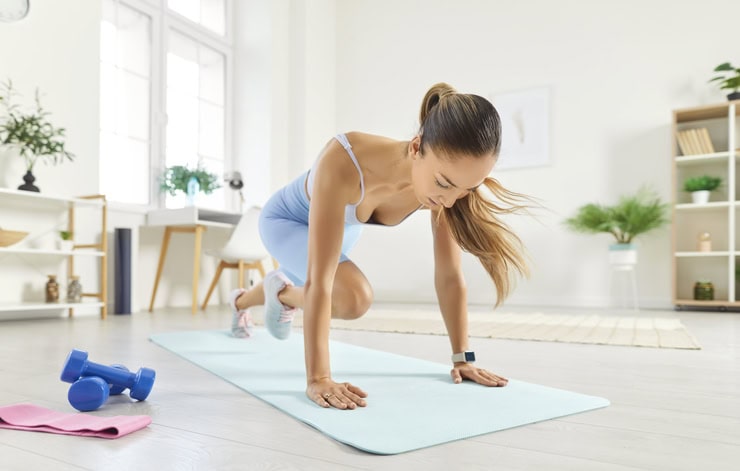
Best Workout Mat for Small Spaces and Apartments. Living in an apartment can make workouts on your yoga mat feel like a puzzle. You want to train hard with the right exercise mat, but you’ve got limited floor space, limited storage, and at least one neighbor who does not appreciate burpees at 6 a.m.
When I’m picking the best workout mat for small spaces and apartments, I keep it simple. I focus on size, thickness (and density), grip, and cleanup. Those four decide whether the compact mat feels stable for strength circuits, safe for HIIT transitions, and comfortable for yoga and mobility work, without turning my living room into a permanent home gym.
“Upgrade Your Home Gym, Grab the Best Workout Mat for Comfort & Grip! 👉 https://amzn.to/4jV8PJe”
Key Takeaways
- I choose an exercise mat based on storage first, then comfort, then grip. If it won’t fit your space, you won’t use it.
- Thickness is a trade-off: more cushion helps joints and supports long-term durability, but too thick can feel wobbly under weight.
- For apartments, the bottom of the mat matters as much as the top. A non-slip underside helps protect floors and prevents creeping on hardwood and tile.
- If noise is a concern, I think in layers: a stable workout mat first, then an optional thin “buffer” underneath for vibration.
- Sweat and odor build up quickly in small spaces, so I prioritize easy-to-clean surfaces and quick-drying routines.
Table of Contents
What makes a workout mat apartment-friendly (and what I avoid)
An apartment-friendly exercise mat does two jobs at once: it supports your training, and it respects your space. Here’s what I look for, and what I skip.
1) Storage footprint (roll vs fold).
If you live in a studio or a tight one-bedroom, storage is the real test. Roll-up mats are common and usually feel better underfoot, but foldable mats can slide under a bed or stand behind a door without turning into a “leaning tower” in the corner.
2) Size that matches your room.
A standard yoga mat length is great, but you don’t always need that much. In tiny rooms, a slightly shorter or narrower mat can work, as long as your feet aren’t constantly landing on bare floor during lunges or planks.
3) Thickness and density (comfort vs stability).
A thick, soft mat can feel great on knees, but it can also make strength work feel unstable. I want cushioning without the “mattress effect.”
4) Grip on top and bottom.
Sweat happens. Hardwood is slick. A natural rubber top surface that stays tacky and a bottom texture that bites the floor is the combo I trust.
5) Noise and vibration control.
Apartments amplify impact. If you train early or you’ve got downstairs neighbors, pay attention to how the mat handles landings and equipment set-downs. For a broader look at building a quiet, compact setup, I like this apartment home gym guide for small spaces.
6) Sweat and odor resistance.
Open-cell foam tends to hold onto funk. I lean toward surfaces that wipe down easily and don’t stay damp.
7) Floor type compatibility.
Hardwood and tile need more bottom grip. Carpet needs enough density so the mat doesn’t bunch or ripple when you pivot.
Thickness and density: how I pick the right feel for strength, HIIT, and yoga
I think in three simple buckets:
Exercise mat feels. Simple range: What I use it for: What to watch for: Thin and firm, about 3 to 5 yoga balance, light mobility, may feel rough on knees/wrists. Medium and stable, about 6 to 8 mmstrength circuits, mixed workouts, usually the best “all-around” choice. Thick and cushyabout 10 mm+joint comfort, floor exercisescan wobble under weights
If my knees and wrists are sensitive, I’d rather choose medium thickness with high-density foam than go super thick and squishy. Denser foam can feel “thinner,” but still provides excellent joint protection.
For lower back comfort during floor work, I focus more on density and support than pure thickness. If the mat collapses under pressure, my back feels it.
Grip and slip: staying stable on hardwood, tile, and carpet
I treat grip like a two-part system.
The top grip keeps my hands and feet planted when I sweat. Bottom grip keeps the mat from drifting across the floor during fast transitions.
A few practical tips that work almost every time:
- Clean for a better grip. Body oils make mats slick. Even a quick wipe can restore traction.
- Use an underlayer if needed. If the mat slides on tile, a thin rug-pad style layer can help (as long as it doesn’t create a squishy stack).
- Do a 30-second slip test at home. I place the mat where I’ll train, then do: one hard plank hold, one fast step-back lunge, and one quick pivot. If the mat creeps more than a couple of inches, the bottom grip isn’t strong enough for that floor.
My simple sizing and layout method for tiny rooms and multipurpose spaces
In an apartment, I don’t “set up a gym.” I mark a temporary training zone, then I put away the lightweight mat. That mindset, with its emphasis on portability, keeps workouts consistent, because the living room still feels like a living room.
Here’s my method:
Step 1: Pick the anchor spot.
I choose a place where my hands won’t hit a coffee table, and my feet won’t kick a wall. Usually, it’s the longest open strip between the couch and the TV stand.
Step 2: Build a small buffer.
I give myself a little space around the mat, even if it’s just 6 to 12 inches. That buffer saves knuckles, shins, and lamps.
Step 3: Decide what the mat must cover.
If I’m doing yoga and mobility, the mat just needs to fit my body. If I’m doing strength circuits with dumbbells, the mat should also protect the floor where I set down the weights.
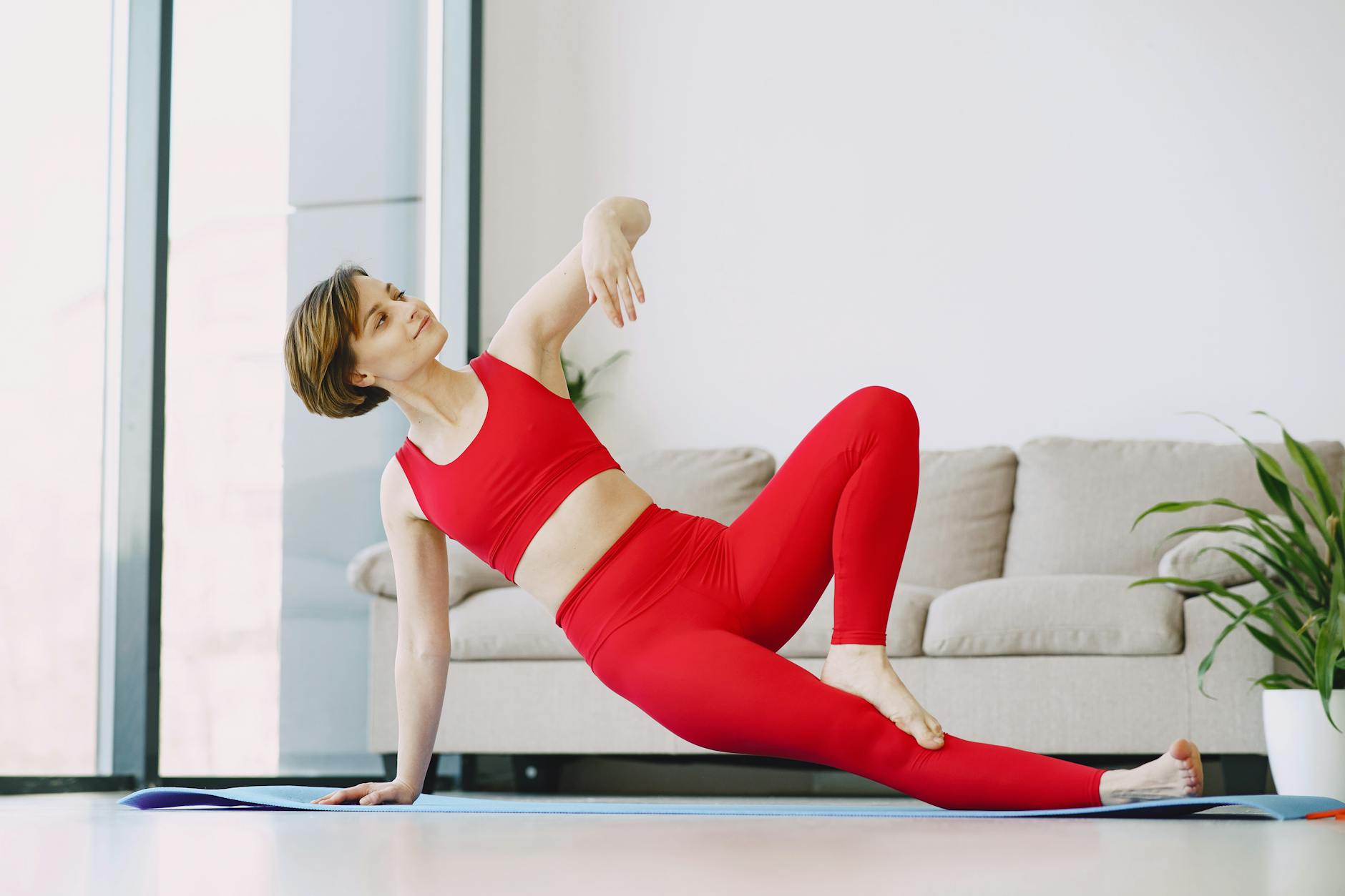
Photo by Gustavo Fring
Quick measuring guide: the smallest space I need for common moves
I keep this realistic. Most people don’t need a huge rectangle, but you do need enough room to move without constantly “falling off” the mat.
- Push-ups and planks: mat length that fits your head to toes (or at least shoulders to feet if you don’t mind toes on the floor).
- Lunges (in place): a bit more length helps, since your stance tends to get long.
- Burpees: You need space beyond the mat, because your feet jump forward and back.
- One-arm dumbbell rows: compact mats work fine, since you’re mostly planted.
- Mountain climbers: Bottom grip matters because you’re driving your legs fast.
When a compact yoga mat works: yoga, stretching, mobility, core work, and controlled strength sets.
When I want a longer mat: workouts with lots of lunges, step-backs, and fast transitions where my feet would keep landing on bare floor.
Storage wins: rolling, folding, hanging, and under-bed options
I’ve tried all the usual storage tricks for my exercise mat, and the “best” one is the one you’ll actually do after a sweaty session.
Rolling is great for storage if you have a closet corner. I use a carrying strap so it doesn’t unroll and collect dust. To avoid curled edges, I roll it tight and store it upright, not half-crushed under a chair.
Folding is a win for storage when you need it flat. Mats with a folding design slide under a bed or into a shallow closet, and they don’t flop over when you stand them up.
Hanging works for storage if you have a sturdy hook and a mat that won’t stretch out. It also helps with drying and odor control.
My simple rule: if the mat is damp, I let it dry flat first. Rolling up a wet mat is like putting sweaty clothes back in the hamper and hoping for the best.
Best workout mat picks by goal, floor type, and noise level
I don’t think there’s one perfect mat for everyone. The best workout mat for small spaces and apartments depends on how you train, your floor type, and how much noise you need to keep. These versatile picks match specific needs.
If you want a sense of what reviewers test for (durability, grip, comfort), this roundup is useful: exercise mat testing criteria and top picks. I treat lists like that as a starting point, then I match features to my space.
Best exercise mat if I do low-impact strength training in an apartment
This is where I want stability more than a cushion.
My priorities:
- Medium thickness, high density
- Bottom grip that won’t creep on hardwood
- A surface that won’t bunch when I pivot
I’m thinking dumbbells, kettlebells, slow lunges, push-ups, and rows. If you’re building your training habit at home, this guide on building a home workout routine that sticks pairs well with a solid mat choice, because it helps you plan around limited space and time.
Best exercise mat if I do HIIT workouts and need more sweat control and easy cleanup
HIIT in an apartment is messy in two ways: sweat and speed.
My priorities:
- Closed-cell or sweat-wicking wipeable surface
- Strong top traction even when damp
- Easy to clean fast, so I don’t procrastinate
My simple routine: I keep a small towel nearby, then do a quick wipe-down right after training. Waiting “until later” is how mats get slick and smelly.
If I need extra cushioning for joints but still want balance
Joint comfort matters, especially if you’re doing pilates, kneeling work, sit-ups, or long mobility sessions on a yoga mat.
My priorities:
- Medium-to-thicker feel with extra-thick cushioning, but not overly squishy
- Enough density that I don’t sink during planks
- Comfort for knees and wrists
A trick I use: instead of buying an ultra-thick mat (that wobbles under load), I add a small knee pad for lunges and kneeling core work. For wrists, I’ll sometimes use push-up handles or do incline moves on a couch.
If noise is the biggest issue with the downstairs neighbors
Noise is usually impact plus vibration. The loud part isn’t just your shoes; it’s the floor transmitting force.
My priorities:
- Dense material with shock absorption that absorbs some impact
- Bottom grip to reduce “slap” on hard floors
- A realistic plan for high-impact moves
If I’m doing jumps, I keep them controlled and land softly. When I need more help, I layer a thin protective sheet or grippy underlayer beneath the mat to cut vibration. It won’t make a plyometric workout silent, but it can make it less rude.
Care, safety, and smart add-ons that make a small home gym feel bigger
A clean exercise mat feels better, grips better, and lasts longer. In a small home, it also keeps the whole room from smelling like yesterday’s workout.
Safety matters too in a home gym. A mat that slides is a problem, and so is a mat that’s so soft you can’t feel stable under your feet. If you want a more editorial-style rundown of what makes mats “worth it,” this list of editor-tested exercise mats highlights common quality markers like grip and durability to emphasize a mat’s lifespan.
Here’s my short “don’t do this” list:
- Don’t use oily cleaners that leave residue (they kill the non-slip grip).
- Don’t roll up a wet mat and shove it in a dark corner.
- Don’t keep using a mat that’s cracking, peeling, or permanently slick.
My quick cleaning routine to keep the mat grippy and not smelly
This takes about two minutes and keeps it easy to clean.
- I wipe the top with a damp cloth (first with water).
- If it needs more, I use a small amount of mild soap, then wipe again with clean water.
- I dry it with a towel and let it air dry flat.
Once a week (or after a heavy-sweat week), I do a deeper clean and make sure the yoga mat dries fully before rolling it.
If you want more simple, realistic home workout tips like this, I share them in my Fit With Greg newsletter signup.
When I add a second layer (and when I do not)
I add a second layer when the floor is slippery, noise is a problem, or I’m providing floor protection for hardwood from dumbbell edges. I keep it thin, stable, and flat, unlike bulkier options such as interlocking tiles for gym flooring.
I don’t add layers when it makes the surface feel unstable. If my feet feel like they’re on a stack of pillows, my form gets worse fast.
FAQ
What thickness is best for apartment workouts?
For most people, I like a medium thickness with good density. It supports strength training and stretching, which requires stability, and feels fine for floor exercises, without wobbling.
Do workout mats work on carpet?
Yes, but I look for denser mats so they don’t bunch up. On thick carpet, very soft yoga mats can shift more during fast moves.
How do I stop my mat from sliding on tile?
First, clean the bottom of the mat. If it still slides, a thin rug-pad style underlayer can help, as long as it stays flat and doesn’t add squish.
How often should I replace my mat?
I replace my lightweight exercise mat when the grip is gone, the surface is cracking, or it smells even after cleaning. In apartments, odor buildup can be the first sign that it’s time.
What’s the quietest option for downstairs neighbors?
A dense mat plus a thin underlayer usually beats a super soft mat alone. I also keep impact low by swapping jumps for step-outs.
Conclusion
The best workout mat for small spaces and apartments isn’t the biggest or thickest; it’s the one that fits your room and stays stable. If you want a simple checklist you can screenshot for your exercise mat, here it is: size, thickness, density, top grip, bottom grip, cleanup, storage, noise.
Pick the mat that matches how you actually train, whether it’s yoga, strength training, or HIIT, then make it easy to roll out and put away. Your next step for your home gym is simple: choose your top two priorities (comfort and quiet, or grip and cleanup), then buy once and use it often.
1 thought on “Best Workout Mat for Small Spaces and Apartments (Comfort, Grip, Quiet)”