
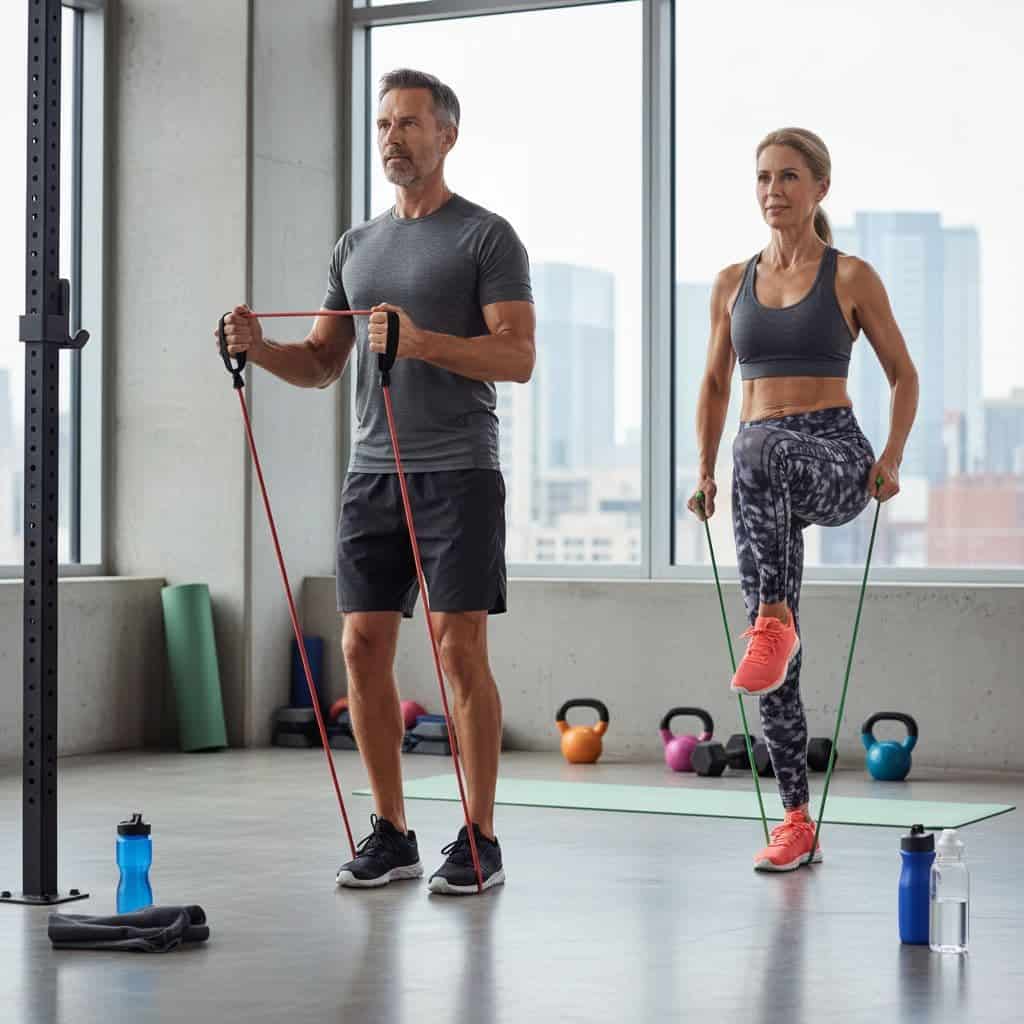
Best Home Workout Equipment for People Over 40. Training at home after 40 feels different. My joints want a longer warm-up, my recovery has more rules, and my schedule has less wiggle room.
The good news is that the best home workout equipment for people over 40 makes your home gym feel smoother, safer, and more repeatable, which actually builds muscle mass and gets results.
In this guide, I’ll break down the best home workout equipment for people over 40 using a simple filter: it has to feel good on my body, be easy to use, and help me get stronger over time. I’ll cover strength training, cardio, balance, and mobility, without trying to sell you a garage full of stuff.
I’ll also keep it realistic: I’m including options for tight budgets and every kind of space, from a small apartment corner to a full garage setup.
Table of Contents
Key Takeaways
- If the equipment hurts, I won’t use it. Joint-friendly comfort comes first.
- The best gear lets me progress in small steps (weight, reps, range of motion, or time).
- A few versatile tools for full-body workouts beat a pile of single-use gadgets.
- For most people over 40, I start with strength basics for bone density, then add joint-friendly cardio.
- Storage matters. If setup is annoying, consistency drops.
- Tracking (even simple notes) helps me avoid doing too much too soon.
- If pain is sharp, new, or worsening, I treat it as a signal to seek guidance.
How I choose the best home workout equipment for people over 40
When I’m buying gear for the home gym, I’m not chasing novelty. I’m chasing repeatable workouts that build strength, protect my joints, and fit real life.
Here’s the decision checklist I use:
- Joint-friendly movement: Smooth resistance and stable positions. No sketchy angles.
- Adjustable resistance: I want small jumps, not giant leaps.
- Low learning curve: If it takes 30 minutes to “set up,” it won’t last.
- Easy storage: Gear should slide under a bed, into a closet, or against a wall.
- Supports progressive overload: The whole point is gradual progress, not random sweat. This is key for strength training.
Then I match gear to goals:
- Fat loss and stamina: I want low-impact steady cardio options I’ll actually do.
- Strength and muscle: I need resistance that grows with me.
- Posture and back health: I prioritize pulling movements and core control.
- Bone health: I focus on resistance training and impact that’s appropriate for me.
Planning matters more than the “perfect” tool. When I’m setting up my week, I keep it simple and follow the same logic I use in building a simple home workout routine.
One important note: if I have persistent pain, recent surgery, dizziness, or heart-related concerns, I talk with a clinician before pushing intensity. For extra safety context and gear ideas for older adults, I also like this Verywell Fit roundup on exercise equipment for older adults.
The five must-haves: safety, comfort, progression, storage, and budget
When I’m shopping, I run this quick mini checklist:
- Safety: Stable base, solid locks, non-slip feet, and no wobble.
- Comfort: Handles that don’t bite my hands, padding where needed, smooth motion.
- Progression: Can I increase difficulty in small steps for months?
- Storage: Can I put it away in under 60 seconds?
- Budget: Can I buy quality once, or choose a simpler tool that still works? A smart home gym is a modern consideration if it fits long-term value.
Common over-40 trouble spots like knees, shoulders, and lower back aren’t a reason to stop. They’re a reason to choose equipment that reduces flare-ups. Stable tools, controlled reps, and innovative ranges of motion keep me training while I build capacity.
Pick equipment based on your goal in one minute
If I want a fast “choose your path,” this is it:
- Strength and muscle: Adjustable dumbbells, kettlebells, bands, sturdy bench.
- Fat loss and stamina: Incline walking setup, recumbent bike, or rower.
- Mobility and pain-free movement: Mat, mini bands, gentle mobility tools.
- Balance and fall prevention: Single-leg strength work, controlled step-ups, and simple supports (a bench or stable surface beats gimmicky balance toys for most people).
Top home workout equipment that gives the most results over 40
If I’m building from scratch, I like a simple buying order. This keeps me from overbuying and still covers nearly everything I need.
My buying order for most people:
- Resistance bands (cheap, joint-friendly, easy to store)
- Dumbbells (adjustable if possible)
- A sturdy bench
- One joint-friendly cardio option
- A mat (and optional suspension trainer)
Now let’s get specific.
Resistance training basics: adjustable dumbbells, resistance bands, and a sturdy bench
If I could only keep three strength tools at home, it would be these.
Why do they work so well over 40?
- Dumbbells let me train one side at a time, which helps balance and control.
- Resistance bands give me smooth resistance and easy modifications.
- A bench opens up pressing, rows, split squats, step-ups, hip thrusts, and supported work when my lower back is cranky.
These tools cover the significant movement patterns for a full-body workout:
- Squat patterns: goblet squat, split squat, step-ups
- Hinges: Romanian deadlifts, hip hinges, hip thrusts
- Presses: floor press, bench press (dumbbell), overhead press
- Rows and pulls: one-arm row, resistance band row, chest-supported row
For those with more room, higher-end alternatives like a functional trainer, power rack, squat rack, weight stack, or plate-loaded setups take things further.
Safety tips I actually use:
- I keep reps controlled, especially the lowering phase.
- I aim for neutral wrists on presses and rows.
- I test the bench before every set (no rocking, no sliding).
- If I’m using a resistance band anchor, I check it like I’m checking a car seatbelt.
- I progress without ego lifting. More reps, slower tempo, cleaner form, and small weight jumps add up fast.
If you like browsing tech-assisted strength options (not required, but interesting), PCMag has a current list of smart home gym equipment with AI form feedback and digital weight features.
Joint-friendly cardio: incline walking setup, recumbent bike, or rowing machine
Cardio over 40 should feel like something I can recover from. If it beats up my knees or back, it won’t survive a busy week.
Here’s a simple comparison to help pick the right tool.
Cardio option: Best for joint feel (general), Space needs (general), Incline walking (treadmill incline or hill walks), Fat loss, daily habit, low skill.
Usually friendly, can irritate knees if speed is too high. Medium to high (treadmill), low if outdoors. Recumbent bike. Sore knees, low back comfort, steady cardio.
Often, the easiest on joints. Medium Rower. Full-body conditioning, stronger back and legs. It can bother the lower back if the form slips. Medium, often stores upright.
My intensity rule: the talk test.
Most days, I keep my cardio pace where I can talk in short sentences. If I can’t get a sentence out, I’m in a hard interval. That’s fine sometimes, but not every day.
If you want another perspective on picking tools for this age range, this trainer-led piece from TODAY is a solid read: fitness tools for older adults.
Core and posture helpers: suspension trainer, pull-up bar alternatives, and a yoga mat
I’m picky about “core” equipment. I don’t need a gadget. I need better control, stronger glutes, and a back that holds good posture when life gets busy.
Suspension trainer: Great for rows, assisted squats, incline push-ups, and core moves that scale easily.
Pull-up bar alternatives: If strict pull-ups aren’t happening yet, band-assisted pulldowns and rows still build my back.
Yoga mat: Makes mobility and floor work comfortable, which increases follow-through.
Beginner-friendly moves I rotate in:
- Rows (band or suspension trainer) for posture
- Assisted squats to stay pain-free while building legs
- Dead bugs for core control without cranking my neck
- Gentle flows and hip openers to keep my range of motion
A quick caution: door-frame anchors can be great, but only if they’re set up correctly. I don’t rush it, and I don’t attach to flimsy doors.

Photo by T Leish
Thoughtful extras that make workouts safer and easier to stick with
These are optional, but I’ve noticed they often make the difference for people over 40. Better warm-ups, less guesswork, and more precise feedback usually mean better consistency.
Warm-up and mobility tools: foam roller, massage ball, and mini bands
I treat mobility tools like a dial, not a cure.
- Foam roller: I use it to relax tight spots and get blood moving, often on calves, quads, and upper back.
- Massage ball: Perfect for smaller areas like glutes, feet, and around shoulder blades (gently).
- Mini bands: Great for glute activation and hip stability before lower-body days.
- Exercise Mat: Perfect for yoga mat-style floor work to cushion joints during warm-ups.
- Stability Ball: Optional extra for balance or core work (try gentle sits and rolls).
Simple use cases that fit real life:
- 60 seconds on calves before walking or squats
- A few mini-band lateral steps to wake up the glutes
- Light upper-back rolling after a long day at a desk
Tracking and support: fitness tracker, timer, and a simple workout log
Over 40, I don’t “wing it” as much. Tracking helps me avoid the boom-and-bust cycle.
What I track (simple, not obsessive):
- Sessions per week (I aim for 3 to 5)
- Steps or cardio minutes (based on my current goal)
- A few strength numbers (like reps and weight on rows, squats, presses)
A basic timer helps me keep workouts tight. A log helps me progress without having to guess. Consistency beats perfection, and tracking makes it easier to build core strength.
Sample equipment setups by budget and space (so I do not overbuy)
I like buying in bundles because it prevents random purchases that don’t work together. These home gym setups also store easily, so my living room doesn’t turn into a clutter pile.
If you need layout help in tight quarters, my Small-space home gym setup guide is a good companion read.
Small space starter kit (minimal gear, significant results)
What I’d buy:
- Resistance bands (loop bands plus long bands)
- One pair of dumbbells or adjustable dumbbells
- A mat
- Optional: suspension trainer with app-based workouts via monthly membership
What it unlocks: Full-body strength and bodyweight exercises (squats, hinges, presses, rows) in small spaces, short cardio finishers (band circuits, brisk step-ups), and mobility work with additional bodyweight exercises. Storage is easy: a small bin and a hook, perfect for small spaces.
Comfort first kit for sore joints (low impact, high consistency)
What I’d buy:
- Recumbent bike (or a simple incline walking plan)
- Bands
- Light dumbbells
- Mini bands
How I pace it: I keep cardio easy most days and sprinkle in short “pick-ups” only when I feel good. I also schedule recovery days like they matter, because they do.
Garage upgrade kit (strength + cardio without the gym vibe)
What I’d buy:
- Adjustable dumbbells or plate-loaded options with weight plates
- Sturdy bench
- Rowing machine or treadmill (based on space and back comfort)
- Bands, mat, and a few mobility tools
What it unlocks: Heavier strength training with support, longer cardio sessions, and enough variety to stay interested in your home gym through winter. I store dumbbells on a compact stand, and I keep bands on wall-mounted hooks.
Start small, train for a month, then upgrade based on what you actually use.
Frequently Asked Questions About Home Workout Equipment for People Over 40
What home workout equipment gives me the most results after 40?
If I want the best return for my money and space, I stick to a small “core kit”:
- Adjustable dumbbells for strength training without a full rack.
- Resistance bands (loop and long bands) for joint-friendly strength work.
- A stable bench (flat or adjustable) to expand exercise options safely.
- A cardio option I’ll actually use, like a stationary bike, treadmill, rowing machine, or even just a jump rope if my joints tolerate it.
Strength training matters a lot over 40 because it helps me keep muscle and bone strength, plus it supports everyday movement.
What’s the most joint-friendly equipment if my knees, hips, or shoulders get cranky?
When my joints need a break, I pick tools that reduce impact and let me control the range of motion:
Best bets: a stationary bike, elliptical, rowing machine, resistance bands, cable-style resistance systems, and a yoga mat for floor work.
If I’m dealing with shoulder irritation, I’m careful with heavy overhead pressing and focus more on rows, chest-supported moves, and slow band work.
Should I buy a treadmill, bike, or rower for cardio?
I choose based on comfort, injury history, and what I won’t dread using.
| If I want… | I tend to choose… | Uses legs and upper body, suitable for short sessions |
|---|---|---|
| The most familiar option | Treadmill | Easy to walk, incline helps without sprinting |
| Lower joint stress | Stationary bike | Smooth motion, easy to control intensity |
| Full-body training | Rower | Uses legs and upper body, good for short sessions |
If my knees get sore from walking, I lean on a bike. If my low back gets tight, I’m picky with rowing form and keep sessions shorter at first.
Are adjustable dumbbells safe and worth it for people over 40?
They’re worth it for me if they feel solid, lock securely, and adjust quickly. Safety comes down to basics: a stable locking system, a weight range that matches my goals, and good handling (not awkward or overly bulky).
I also pay attention to how I’ll use them. For example, if I do goblet squats and presses regularly, I want dumbbells that are comfortable to hold at chest level.
Do I really need a bench, or can I train without one?
I can train without a bench, but a good bench makes strength training easier and more comfortable. It helps with presses, rows, step-ups, split squats, and supported work that’s easier on my back.
If I buy one, I look for a broad, stable base and a weight rating that fits my body weight plus the weights I’ll lift.
What equipment helps with balance and mobility after 40?
I keep it simple:
A yoga mat for floor work, a foam roller for muscle soreness and tight spots, and a light resistance band for controlled mobility drills.
For balance work, I don’t need fancy gear. Standing on one leg near a wall, slow step-ups, and controlled heel-to-toe walks go a long way.
Is a kettlebell a good idea over 40, or is it risky?
A kettlebell can be great if I start light and learn form. The risk usually comes from going too heavy too soon, especially with swings.
If I’m new to kettlebells, I start with basics like deadlifts, goblet squats, and carries. I save swings for later, once my hip hinge is solid.
How much equipment do I need for a full-body home workout?
I can cover a full-body routine with surprisingly little:
One strength tool (dumbbells or bands), one comfortable cardio option, and a mat.
If I want one upgrade that expands everything, I add a bench. If space is tight, bands and a door anchor can still give me many exercise options.
What should I avoid buying if I’m getting back into training?
I avoid gear that’s hard to use consistently or forces awkward positions. I’m cautious with:
- Very cheap, unstable benches or flimsy racks
- Ultra-light dumbbells that I’ll outgrow in weeks
- Random gadgets that promise quick results but limit real training
I’d rather buy fewer items that feel sturdy and get used every week.
How do I pick equipment if I have limited space?
I focus on compact items that store easily: adjustable dumbbells, bands, a mat, and a foldable bench. For cardio, I’m most likely to choose a bike or a compact rower, depending on storage.
If I’m tight on space, I set one rule for myself: if it doesn’t store in a closet or a corner, I don’t buy it.
Conclusion
The best home gym equipment for people over 40 is the gear I’ll actually use, that feels good on my joints, and that lets me progress without beating myself up.
I keep it simple: pick one strength-training tool (dumbbells or bands) and one cardio option (walking, biking, or rowing), then follow a basic weekly plan. If you want simple workouts and gear tips like exercise mats and resistance bands that don’t waste money, join my newsletter here: get my weekly workout tips.
Consistent home workouts build core strength; your next workout doesn’t need to be perfect, it just needs to happen, and then happen again.
3 thoughts on “Best Home Workout Equipment for People Over 40 (What I’d Buy and Why)”